Nestled in the remote reaches of the Tibetan Plateau, Mt. Kailash stands as a beacon of spiritual enlightenment and cultural reverence. Known as the “Axis Mundi” or the center of the universe, this majestic peak is considered the most sacred pilgrimage site in the world. For millennia, it has drawn millions of pilgrims, adventurers, and seekers of truth from diverse religious backgrounds. But what makes Mt. Kailash so profoundly significant? Let’s explore the spiritual and cultural importance of this enigmatic mountain.
The Spiritual Significance of Mt. Kailash
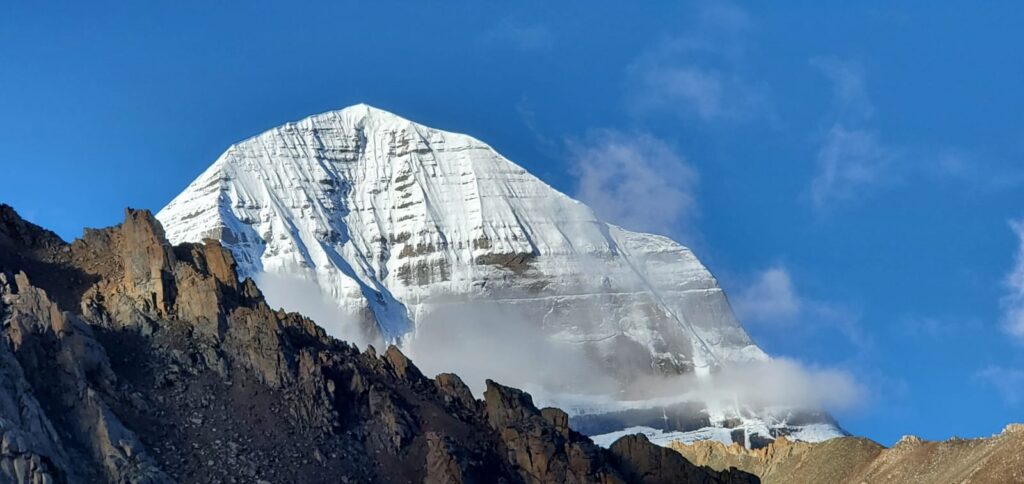
Mt. Kailash is revered as a sacred site in four major religions: Hinduism, Buddhism, Jainism, and Bon. Each tradition attributes its unique spiritual significance to the mountain, yet all agree on its divine nature.
- In Hinduism:
For Hindus, Mt. Kailash is the abode of Lord Shiva, the destroyer and transformer within the Holy Trinity. It is believed that Shiva resides atop the mountain in a state of eternal meditation, alongside his consort, Goddess Parvati. The sacred texts, including the Vedas and Puranas, describe Kailash as a place of ultimate peace and liberation (moksha). Pilgrims undertake the arduous Kailash Parikrama (circumambulation) to seek blessings and cleanse their sins. - In Buddhism:
Buddhists regard Mt. Kailash as the home of Demchok (or Chakrasamvara), a deity representing supreme bliss. The mountain is also associated with the legendary Mount Meru, the cosmic center of the universe. The Kora (circumambulation) around Kailash is believed to bring good fortune and spiritual merit, with one full circuit said to erase the sins of a lifetime. - In Jainism:
For Jains, Mt. Kailash is known as Ashtapada, the site where their first Tirthankara, Rishabhadeva, attained enlightenment. The mountain holds immense historical and spiritual importance, symbolizing the path to liberation and purity. - In Bon Tradition:
The ancient Bon religion, which predates Buddhism in Tibet, considers Mt. Kailash the seat of all spiritual power. It is believed to be the location where the founder of Bon, Tonpa Shenrab, descended from heaven. The mountain is central to Bon rituals and practices.
The Cultural Importance of Mt. Kailash
Beyond its spiritual significance, Mt. Kailash is a cultural treasure trove. Its remote location and untouched beauty have preserved its sanctity over centuries. The mountain is surrounded by pristine lakes, including the sacred Lake Mansarovar, which is believed to cleanse the soul upon bathing in its waters.
The annual Saga Dawa festival, celebrated by Buddhists, marks the enlightenment of Buddha and attracts thousands of pilgrims who gather to perform rituals and prayers. The cultural practices and traditions associated with Mt. Kailash have been passed down through generations, making it a living testament to humanity’s spiritual heritage.
The Mystique of Mt. Kailash
Mt. Kailash is shrouded in mystery and wonder. Unlike other peaks, it has never been climbed, as it is considered sacrilegious to attempt to summit this sacred mountain. Its unique pyramid-like shape, with a vertical gash on its south face, adds to its mystique. The mountain’s four faces are said to be made of crystal, ruby, gold, and lapis lazuli, symbolizing purity, power, and divinity.
The circumambulation of Mt. Kailash, known as the Kora, is a 52-kilometer journey that tests the physical and mental endurance of pilgrims. The trek takes place at an altitude of over 15,000 feet, with the highest point being the Dolma La Pass (18,500 feet). Despite the challenges, the Kora is a transformative experience, offering breathtaking views and a deep sense of connection to the divine.
Why Mt. Kailash is the Ultimate Pilgrimage?
Mt. Kailash is more than just a mountain; it is a symbol of unity, faith, and transcendence. Its universal appeal across religions and cultures makes it a unique pilgrimage site. Here’s why it stands out:
- A Place of Unity: Mt. Kailash transcends religious boundaries, bringing together people of different faiths in a shared quest for spiritual enlightenment.
- A Test of Devotion: The challenging journey to and around the mountain is a testament to the pilgrim’s dedication and faith.
- A Source of Inner Peace: The serene environment and spiritual energy of Mt. Kailash offer a rare opportunity for introspection and self-discovery.
Mt. Kailash is not just a geographical wonder but a spiritual phenomenon. Its unparalleled significance in Hinduism, Buddhism, Jainism, and Bon, combined with its cultural richness and natural beauty, makes it the most sacred pilgrimage in the world. For those who seek to connect with the divine, Mt. Kailash offers a journey like no other—a journey that transcends the physical and touches the soul.
Whether you are a spiritual seeker, a cultural enthusiast, or an adventurer at heart, a Mt. Kailash tour offers the ultimate journey to experience its timeless allure. Embark on this sacred pilgrimage, and you may just find the answers you’ve been searching for.