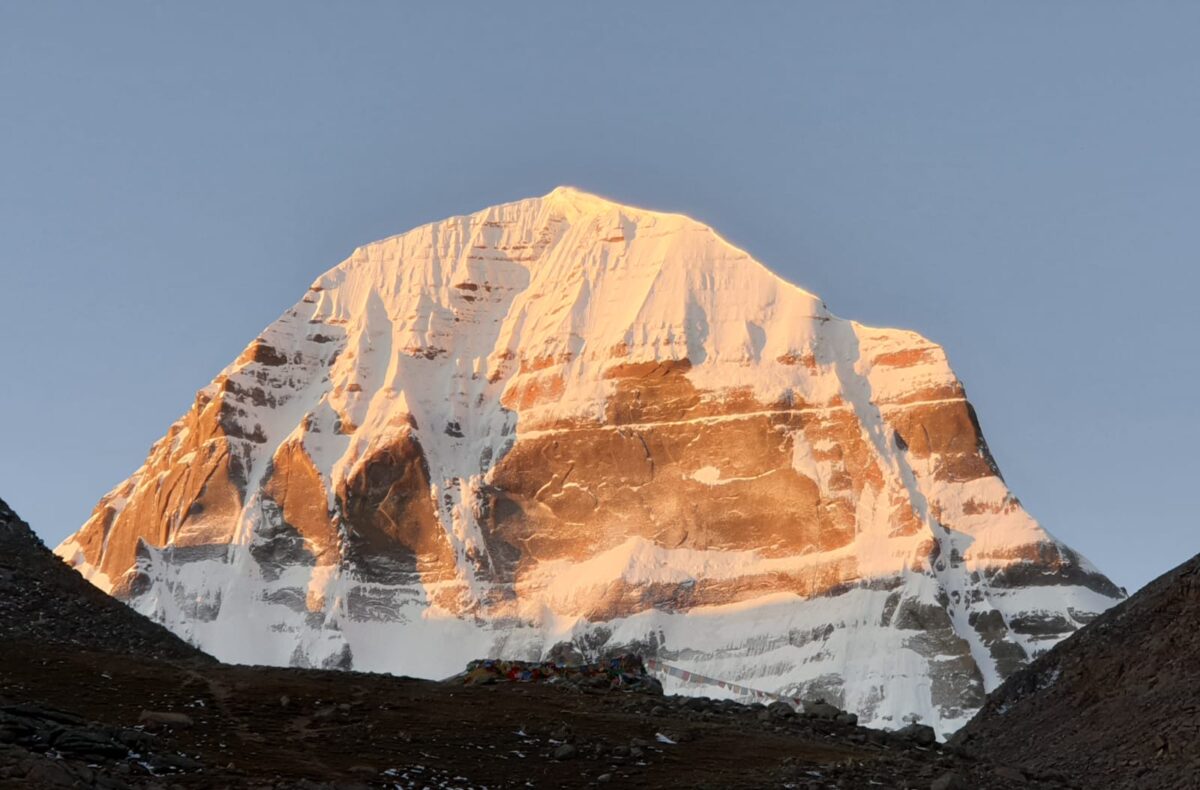
Choose the Tibet side if you have about a week, don’t want a long trek, and want the best view of Everest’s north face with fewer people around. Choose the Nepal side if you want a proper multi-day EBC trek through Sherpa villages and the feeling of walking all the way there. Nepal’s base camp is higher (5,364 m against 5,150 m), the Tibet side is quieter and takes less time, and the two trips feel almost nothing alike. The right one depends on how much time you have, how much walking you want to do, and what you hope to see.
If you’re searching for an EBC tour or EBC trek, you’ve probably noticed that Everest has two base camps, one in Nepal and one in Tibet. Most guides treat them as the same trip with a different starting point. They’re not. Here’s a plain comparison to help you decide before you start booking.
Why Are There Two Everest Base Camps?
Everest sits right on the border between Nepal and Tibet (China). Climbers can go up from either side, so each side has its own base camp.
- South Base Camp is in Nepal, in the Khumbu region, at about 5,364 meters (17,598 ft).
- North Base Camp is in Tibet, at the foot of the Rongbuk Glacier, at about 5,150 meters (16,900 ft).
Both are real base camps used by expeditions. Most visitors never go higher than these, which is why people call them the “Everest Base Camp” and aim for them as a travel goal.
Everest Base Camp Tibet Side vs Nepal Side at a Glance
| Tibet Side (North) | Nepal Side (South) | |
|---|---|---|
| Base camp height | About 5,150 m | About 5,364 m |
| How you get there | Drive, with an optional short walk or trek | Walk, usually 8 to 10 days up |
| Typical trip length | 8 to 9 days including Lhasa | 12 to 15 days from Kathmandu (shorter with a helicopter return) |
| Physical effort | Low on the legs, high on the lungs | High on the legs and the lungs |
| View of Everest | Full north face, wide open | Mostly Lhotse and Nuptse at camp; the summit shows from Kala Patthar |
| Crowds | Quiet | Busy in spring and autumn |
| Permits | Chinese visa or visa-free entry, Tibet Travel Permit, Alien’s Travel Permit | Park and local permits, arranged by your operator |
| Guide | Required, travel is with a licensed operator | Optional but common |
| Sleeping | Hotels in Lhasa and towns, basic guesthouses near Rongbuk | Tea houses along the trail |
| Best for | Short trips, culture lovers, travelers who don’t want to trek | Trekkers, first-timers who want the full experience |
How Do You Get to Everest Base Camp on the Tibet Side?
You travel overland from Lhasa, usually along the Friendship Highway through Gyantse, Shigatse, and Tingri. A road of about 100 km turns off near Shelkar and leads up to the Rongbuk valley and the base camp area. Many tours take 8 or 9 days in total, with two nights in Lhasa first to adjust to the altitude.
On the way, you pass Yamdrok Lake and the Karo La glacier, visit monasteries like Tashilhunpo and the Gyantse Kumbum, and end up at Rongbuk Monastery, which is one of the highest monasteries in the world at around 5,000 meters. From Rongbuk you continue to the base camp area, usually by shuttle bus, though some travelers walk the last stretch. Your operator can tell you how this works in your travel season.
If you do want to walk, there are North EBC trek options too. Our Tingri to Everest Base Camp trek (15 days) and Kharta Valley trek (19 days) are two of them. If you like cycling, we also run a bike tour to North Everest Base Camp.
How Do You Get to Everest Base Camp on the Nepal Side?
You fly from Kathmandu to Lukla (in busy seasons, flights sometimes leave from Ramechhap instead), then walk. The standard Everest Base Camp trek goes through Phakding, Namche Bazaar, Tengboche, Dingboche, Lobuche, and Gorak Shep before the final walk to base camp. Most people also climb Kala Patthar (about 5,550 m) for the best sunrise view of Everest.
The classic route is roughly 100 to 130 km round trip and takes most trekkers 12 to 14 days. You sleep in tea houses, eat dal bhat and noodles, and share the trail with trekkers from all over the world. If you’re short on time, shorter versions exist, including trips that fly you back from base camp by helicopter. See our Everest Base Camp Trek (15 days), Short EBC Trek (12 days), and Quick EBC Trek (10 days).
Which Side Has the Better View of Everest?
The Tibet side, by a wide margin. From the north base camp you look straight at the whole north face of Everest, 8,849 meters, with nothing blocking it. On a clear day it’s one of the most open mountain views you can get without being a climber.
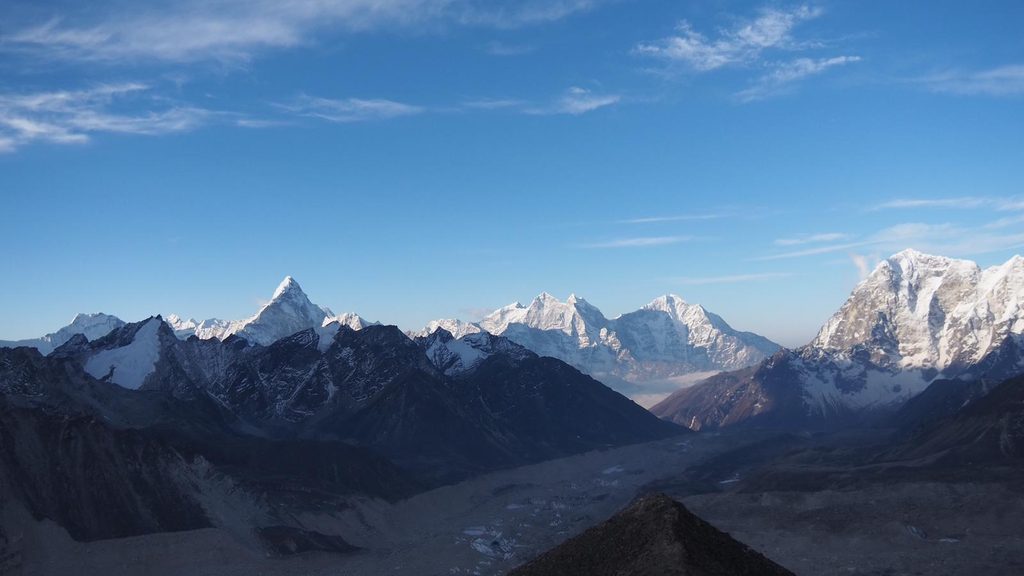
On the Nepal side, Everest is hidden behind the Lhotse-Nuptse wall when you reach base camp itself. You see the Khumbu Icefall and a camp full of expedition tents, but not the summit. To see Everest properly, you climb Kala Patthar. That’s a big reason almost every Nepal trek includes it.
Which Side Is Harder?
This one needs two answers.
For your legs, the Nepal side is harder. You walk 5 to 7 hours a day for over a week, uphill, on rocky trails. The Tibet side asks almost nothing of you physically if you travel by vehicle.
For your lungs, the Tibet side can be harder. On the Nepal side you climb slowly and your body adjusts over 8 or 9 days, with rest days built in. On the Tibet side you go from Lhasa (3,650 m) to around 5,150 m in just a few days, mostly by vehicle. Altitude sickness doesn’t care how you arrive. Our guide on altitude sickness in Tibet covers symptoms and prevention in more detail.
A good itinerary on either side builds in acclimatization. Don’t skip it.
What About the Permits?
This is where the two sides differ most.
Tibet side: You need a Chinese visa (or visa-free entry if your passport qualifies), a Tibet Travel Permit, and an Alien’s Travel Permit. You can’t apply for them yourself. A licensed Tibet travel agency does it for you, so you must book a tour first. Start early, because permits take weeks. We explain the full process in our guides to the Tibet Travel Permit and China visa vs Tibet Travel Permit. Access rules and dates can also change from year to year, so confirm with your operator before you buy flights.
Nepal side: You need a Nepal visa, plus park and local trekking permits. Your operator usually arranges them. There’s far less paperwork, and the process is much simpler.
How Do the Costs Compare?
It’s hard to give one number, because it depends on season, group size, and style. But a few patterns hold:
- Tibet side trips usually cost more per day. Permits, a guide, and a vehicle are required, and these costs are shared less when you travel in a small group.
- Nepal side treks cost less per day, but you spend more days. A 14-day trek can end up close in total cost to an 8-day Tibet trip.
- On the Nepal side, extras add up along the trail: hot showers, charging, Wi-Fi, and snacks all get pricier as you climb.
- Flights matter. Kathmandu to Lukla and back is a significant cost on the Nepal side. On the Tibet side, you pay for your flight or train to Lhasa.
For exact prices on our current trips, ask us for a quote. Group size and season change the numbers a lot.
When Is the Best Time to Go?
Nepal side: Spring (March to May) and autumn (late September to November) are the best seasons. The skies are clearer and the trails are drier. Winter is cold but quiet. The monsoon (June to August) brings rain and cloud, and flights to Lukla get delayed more often.
Tibet side: Spring and autumn are usually the most comfortable, and summer is warm in Lhasa and Shigatse. Winter is very cold and windy up at base camp. Opening dates and conditions can vary, so check with your operator when you pick your dates.
What Is the Experience Actually Like?
Nepal side: It’s a trek in the full sense. You cross suspension bridges, pass through Sherpa villages, stay in lodges, and talk with other trekkers over dinner. The arrival at base camp feels earned after days of effort. It’s also more crowded in peak seasons, and the base camp itself is mostly a tent city and a rocky glacier.
Tibet side: It’s more of a journey than a trek. You see Lhasa’s Potala Palace and Jokhang Temple, cross high passes, drive through wide plateau scenery, and visit working monasteries. The base camp is quieter, with the north face in front of you and Rongbuk Monastery close by. People who like culture and big scenery tend to love it. People who want the full trekking challenge sometimes feel it’s too easy.
Which One Should You Choose?
Pick the Tibet side if:
- You have 8 to 10 days, not 14 or more
- You don’t want to trek for a week
- You want the best, widest view of Everest
- You like monasteries, history, and the Tibetan plateau
- You’re traveling with older family members or someone who can’t do long walking days
- You prefer quieter places
Pick the Nepal side if:
- You want the classic Everest Base Camp trek
- You enjoy multi-day walking and mountain villages
- You want the challenge and the sense of achievement
- You’d like fewer permits and simpler paperwork
- You have 12 to 15 days and flexible dates
Can’t decide? Some travelers do both, on separate trips. Others pick the Tibet side first because it’s shorter, then come back to trek the Nepal side. If you’re also thinking about western Tibet, our Mount Kailash Kora guide covers that journey.
Our Tibet Side EBC Tours
If the Tibet side sounds right, these are the trips to look at:
- Everest Base Camp via Tibet, 8 days
- 8 Night 9 Days Everest Base Camp via Tibet
- Tibet Fly In and Drive Out EBC Tour, 9 days
You can browse all of them on our Tibet tours page, or look at our full range of Everest region treks in Nepal.
Frequently Asked Questions
Which is better, Everest Base Camp in Tibet or Nepal? Neither is better. Tibet is better for a shorter trip with an open view of the north face. Nepal is better for a classic trek. Pick based on your time, fitness, and what you want to see.
Is the Tibet side of Everest Base Camp easier than the Nepal side? It’s easier on your legs because you travel by vehicle instead of walking for days. It isn’t automatically easier on your body, because you gain altitude quickly. Spend at least two nights in Lhasa first.
Which Everest Base Camp is higher? The Nepal side. South Base Camp is at about 5,364 m and North Base Camp is at about 5,150 m. That’s roughly 200 meters of difference.
Can you drive to Everest Base Camp? On the Tibet side, yes, up to the base camp area by road, with a shuttle bus for the final part in many cases. On the Nepal side, no. You have to walk from Lukla, or fly in and out by helicopter for part of the trip.
Can you see Everest from base camp on both sides? From the Tibet side, yes, and the view is wide open. From the Nepal side, the summit is mostly hidden from base camp itself. You need to climb Kala Patthar to see it properly.
How long does each EBC trip take? A Tibet side tour usually takes 8 to 9 days including Lhasa. A Nepal side trek usually takes 12 to 14 days, with shorter options of 10 days or so using a helicopter return.
Do I need a permit for Everest Base Camp in Tibet? Yes. You need a Tibet Travel Permit and an Alien’s Travel Permit, plus a Chinese visa unless your passport is visa-free. Your tour operator arranges the permits.
Do I need a permit for Everest Base Camp in Nepal? Yes, park and local trekking permits, which your operator usually arranges. There’s no equivalent to China’s Tibet permit process.
Is Everest Base Camp in Tibet cheaper or more expensive? It’s usually more expensive per day, because permits, a guide, and a vehicle are required. The trip is shorter, so the total can be similar to a Nepal trek. Group size and season affect the price more than anything else.
Can I trek to Everest Base Camp from the Tibet side? Yes. There are trekking options such as Tingri to Everest Base Camp and the Kharta Valley route, in addition to the standard drive-up tours.
When is the best time to visit Everest Base Camp? Spring and autumn are best on both sides. Winter is cold, and the monsoon months bring rain and cloud, especially in Nepal.
Which side is better for older travelers or children? The Tibet side is usually gentler on the legs, which helps older travelers and families. Both sides are high altitude, so talk to your doctor first and give yourself time to adjust.
Which side is less crowded? The Tibet side. The Nepal side is busy in spring and autumn, with hundreds of trekkers on the trail in peak weeks.
Planning an Everest Base Camp Trip?
The best way to choose is to talk about your dates, your fitness, and how much time you have. Send us an inquiry with those details, and tell us whether you lean toward the Tibet side or the Nepal side. We’ll suggest a North EBC tour or an EBC trek that fits, and walk you through permits, timing, and costs so you can plan with fewer surprises.