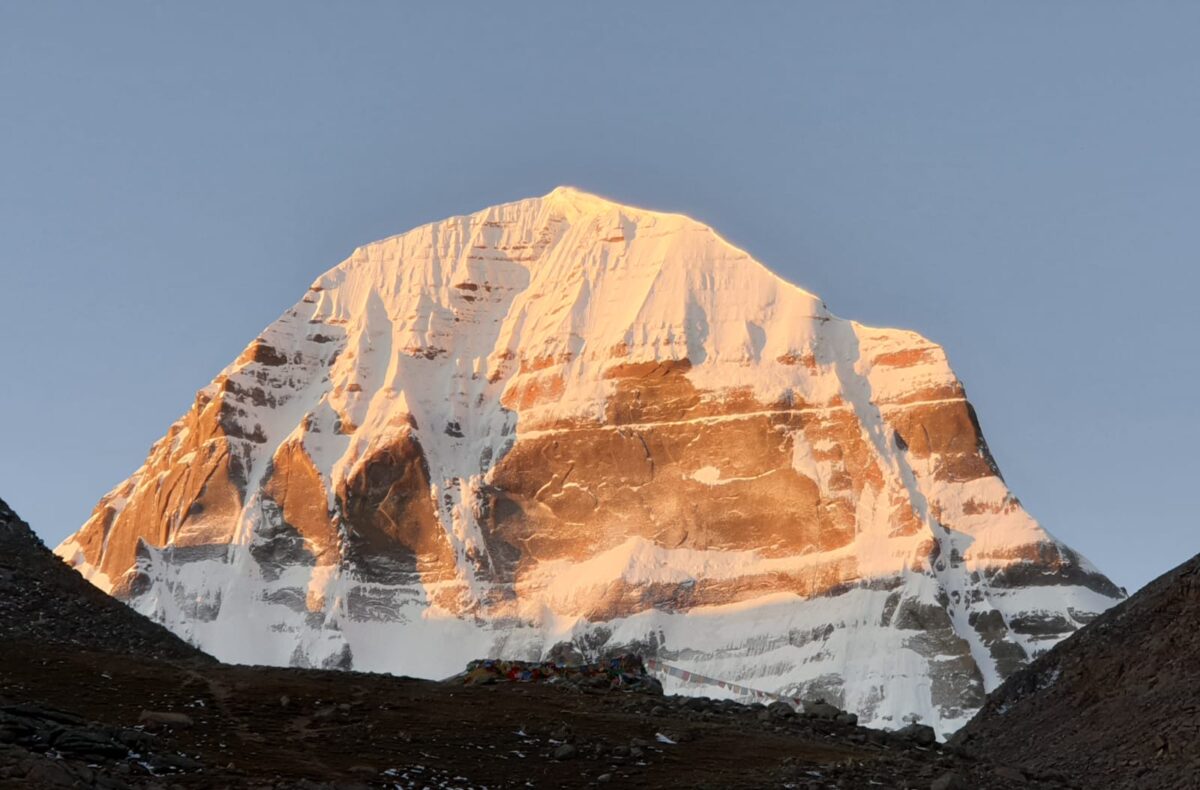
A Lhasa motorbike tour is one of the most extraordinary ways to experience the Tibetan Plateau.
Instead of simply travelling across Tibet by car or bus, you experience the landscape at road level: the enormous open plateau, high mountain passes, turquoise lakes, Tibetan villages, monasteries, winding Himalayan roads and, ultimately, the spectacular north face of Mount Everest.
For riders, the attraction is not simply reaching Lhasa or Everest Base Camp. It is the journey between them.
A typical Lhasa to Everest Base Camp motorcycle tour combines time in Lhasa for acclimatization and sightseeing with several days of riding through central Tibet toward Shigatse, Tingri and the Everest region. Depending on the itinerary, riders can experience some of the highest paved roads and mountain passes accessible by motorcycle.
This guide explains what you need to know before planning a Tibet motorbike tour, including the route, permits, motorcycles, altitude, riding conditions, best time to go, accommodation, costs, physical preparation, safety, packing, and the most frequently asked questions.
The goal is simple: help you decide whether a Tibet motorcycle adventure is right for you before you book it.
What Is a Lhasa Motorbike Tour?
A Lhasa motorbike tour is a guided motorcycle journey through Tibet, usually beginning in Lhasa and continuing toward destinations such as Shigatse and Everest Base Camp.
For international travelers, Tibet is not a destination where you can normally organize an independent motorcycle road trip in the same way you might in Nepal, India or Europe. Tibet travel involves specific permits and organized travel arrangements, and foreign visitors need to work with an authorized travel operator for the required Tibet travel documentation.
A typical Lhasa–Everest Base Camp motorcycle itinerary may include:
- Lhasa
- Potala Palace
- Jokhang Temple
- Barkhor Street
- Yamdrok Lake or other high-altitude landscapes depending on the route
- Gyantse
- Shigatse
- Tashilhunpo Monastery
- Tingri or the Everest region
- Rongbuk Monastery
- North Everest Base Camp
- Himalayan mountain passes
- Views of Mount Everest
The exact route, riding days, road conditions and permits can change, so your final itinerary should always be confirmed before departure.
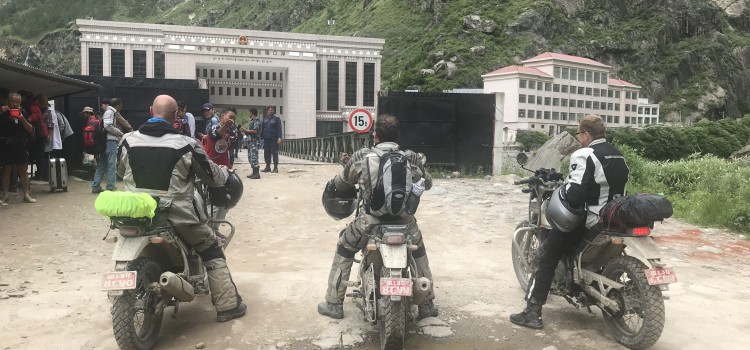
Why Ride a Motorcycle to Lhasa and Everest Base Camp?
There are many ways to travel through Tibet, but a motorcycle provides a completely different experience.
From the saddle, you are exposed to the landscape rather than separated from it by a vehicle window.
You can stop for photographs, experience changes in temperature and wind, hear the road and surroundings, and appreciate the enormous scale of the Tibetan Plateau.
For experienced riders, the journey can be as important as the destination.
The major attractions include:
1. Riding across the Tibetan Plateau
Tibet offers vast open landscapes unlike most conventional motorcycle destinations.
2. High-altitude mountain passes
Some routes cross passes above 5,000 metres, creating a riding environment that requires preparation and respect.
3. Mount Everest from the north
The Tibetan side provides a spectacular perspective of Everest and the surrounding Himalayan range.
4. Lhasa
The journey normally begins with time in Lhasa, allowing riders to experience Tibet’s cultural and historical heart before heading into the mountains.
5. Tibetan monasteries and culture
The route can combine motorcycle riding with visits to major monasteries, historic sites and traditional Tibetan settlements.
6. The sense of expedition
A Tibet motorcycle trip feels more like an expedition than a conventional holiday.
Lhasa to Everest Base Camp by Motorcycle: What Is the Route Like?
One of the most popular concepts for an adventure rider is:
Lhasa → Gyantse → Shigatse → Tingri → Everest Base Camp
The precise itinerary can vary, but the journey generally progresses from Lhasa toward central Tibet and then west toward the Everest region.
A representative route looks like this:
Day 1 – Arrival in Lhasa
Arrive in Lhasa and transfer to your hotel.
There is normally no need to ride on arrival day. The priority is rest and beginning the acclimatization process.
Lhasa sits at approximately 3,650 metres above sea level, so even walking around the city can feel more tiring than expected.
Day 2 – Lhasa Sightseeing and Acclimatization
Spend the day exploring Lhasa.
Typical attractions include:
- Potala Palace
- Jokhang Temple
- Barkhor Street
- Sera Monastery
- Norbulingka
This is also an important acclimatization day.
Do not underestimate it.
You may feel healthy at sea level and still experience headache, breathlessness, poor sleep or fatigue after arriving in Lhasa.
Day 3 – Lhasa / Motorcycle Preparation
Depending on the tour design, this day can be used for further sightseeing, motorcycle briefing, paperwork, equipment checks and preparation for the road journey.
This is a good opportunity to:
- Check the motorcycle
- Test riding position
- Organize luggage
- Confirm emergency procedures
- Meet the guide and support team
- Discuss the riding schedule
- Review the route
Day 4 – Lhasa to Gyantse
The journey begins.
The landscape changes quickly as you leave Lhasa behind and enter the open Tibetan Plateau.
Depending on the exact route, riders may encounter high mountain passes and dramatic Himalayan scenery.
This is when the motorcycle experience really begins.
Day 5 – Gyantse to Shigatse
The journey continues toward Shigatse.
Gyantse is historically significant and is known for Pelkor Chode Monastery and Gyantse Dzong.
Shigatse is one of the major cities of Tibet and is home to Tashilhunpo Monastery.
Day 6 – Shigatse toward Tingri / Everest Region
The landscape becomes increasingly remote.
Open plains, enormous mountain horizons and increasingly high-altitude terrain dominate the route.
Riders should expect a full riding day rather than a short sightseeing transfer.
Day 7 – Tingri to Everest Region
The road continues toward Mount Everest.
This is one of the most anticipated parts of the entire trip.
As the Himalayas become increasingly prominent, riders begin to appreciate why the north-side Everest route is so popular with adventure motorcyclists.
Day 8 – Everest Base Camp
The highlight of the trip.
The Tibetan side of Everest offers a dramatic view toward the world’s highest mountain.
The exact location where motorcycles are permitted and the final transport arrangements around the Everest Base Camp area can depend on current local regulations, so your operator should confirm the latest access rules before departure.
Return Journey
The return can follow the same general route or a modified itinerary depending on the tour.
Some motorcycle itineraries continue toward Nepal and Kathmandu, while others return to Lhasa or conclude elsewhere in Tibet.
How Many Days Do You Need for a Lhasa Motorcycle Tour?
A comfortable Lhasa–Everest motorcycle journey generally needs more than just a few riding days.
You need to allow time for:
- Arrival
- Acclimatization
- Lhasa sightseeing
- Motorcycle preparation
- Riding
- Rest
- Weather
- Road conditions
- Everest Base Camp
- Permit and checkpoint logistics
A trip of around 10–14 days is a practical range for many Lhasa–Everest motorcycle itineraries.
Longer journeys are possible if you want to include:
- Kathmandu
- Nepal–Tibet border crossing
- Mount Kailash
- Lake Manasarovar
- Namtso
- Western Tibet
- Additional Tibetan monasteries
- Additional rest/acclimatization days
Can You Ride a Motorcycle from Kathmandu to Lhasa?
Yes, Kathmandu–Lhasa motorcycle tours are a popular form of Himalayan overland adventure, but they are more complicated than simply renting a motorcycle in Nepal and crossing the border.
A Kathmandu–Tibet motorcycle expedition involves international border procedures, Tibet travel permits, vehicle and rider documentation, and organized travel arrangements.
The route commonly enters Tibet through the Gyirong/Rasuwagadhi border area before continuing toward the Tibetan Plateau.
A Kathmandu–Lhasa–Everest Base Camp motorcycle journey can therefore combine:
Kathmandu → Gyirong → Tibet Plateau → Everest → Shigatse → Lhasa
or the reverse, depending on the itinerary and border arrangements.
If you are particularly interested in riding from Nepal, ask your tour operator about the current border-entry requirements before making flights or other non-refundable arrangements.
Can Foreigners Ride Motorcycles in Tibet?
Foreign travelers can participate in organized motorcycle tours in Tibet, but the process is different from simply renting a motorcycle and travelling independently.
Foreign travelers require the appropriate Tibet travel documentation and must follow the organized travel requirements applicable to their nationality and route. Tibet Travel Permit arrangements are normally handled through a qualified Tibet travel agency.
Motorcycle tours may also require additional riding documentation, temporary driving authorization and vehicle-related paperwork.
These requirements can change, so riders should not rely on an old blog post or forum discussion when preparing their documents.
Always confirm the current requirements for your nationality, entry point and motorcycle itinerary before departure.
Do You Need a Tibet Travel Permit for a Motorbike Tour?
Yes, international travelers generally need a Tibet Travel Permit to enter and travel in Tibet.
The permit is also referred to as the:
- Tibet Travel Permit
- Tibet Entry Permit
- Tibet Tourism Bureau Permit
- Tibet Permit
- TTB Permit
Current travel information confirms that foreign travelers require the Tibet Travel Permit and that the application is arranged through an authorized Tibet travel agency rather than as an ordinary individual tourist application.
For a motorcycle tour, your operator may also need to arrange additional permits or travel documents depending on the route.
This is particularly important if your itinerary includes:
- Everest
- Border areas
- Western Tibet
- Mount Kailash
- Remote prefectures
- Nepal–Tibet border crossings
What About a China Visa?
A China visa and a Tibet Travel Permit are not necessarily the same thing.
Your visa requirements depend on your nationality, current Chinese visa policy and where you enter China.
China’s visa-free policies have changed significantly in recent years, and visa rules can change again.
For example, current Tibet travel information notes that visa-free entry into China does not automatically eliminate the requirement for the Tibet Travel Permit.
Therefore, do not assume:
“I can enter China without a visa, so I can ride to Tibet without a permit.”
Those are separate questions.
What Motorcycle Is Used for a Tibet Motorcycle Tour?
The motorcycle is one of the most important decisions when planning a Tibet riding adventure.
A suitable motorcycle should be:
- Reliable
- Comfortable for long riding days
- Capable at high altitude
- Easy to control on mountain roads
- Suitable for the rider’s experience
- Equipped with appropriate luggage
- Supported by a mechanic or support vehicle
Motorcycle models offered by operators vary.
Adventure bikes commonly used on Tibet motorcycle tours can include mid-sized motorcycles such as:
- 250cc–500cc adventure motorcycles
- 450cc-class motorcycles
- 650cc–800cc adventure motorcycles
Larger motorcycles are not automatically better.
At high altitude, reliability, rider confidence, handling and manageable weight can be more important than engine size.
Is a 250cc Motorcycle Enough for Tibet?
For many riders, a 250cc motorcycle can be adequate for a well-planned Tibet route.
The answer depends on:
- Motorcycle model
- Rider weight
- Luggage
- Passenger load
- Road gradient
- Wind
- Altitude
- Mechanical condition
- Riding experience
At extreme altitude, every engine produces less power because the air is thinner.
Therefore, riders should not expect a motorcycle to perform at 5,000+ metres exactly as it does at sea level.
Is a 500cc or 800cc Motorcycle Better?
A larger engine can provide additional power and comfort, especially on long highway sections and when carrying luggage.
However, larger motorcycles also tend to be heavier.
That matters when:
- Parking on uneven ground
- Turning around on narrow roads
- Managing a motorcycle at low speed
- Recovering from a tip-over
- Riding tired
- Riding in strong wind
For many adventure riders, a middleweight motorcycle provides a good balance between power, comfort and manageability.
Do You Need Previous Motorcycle Experience?
Yes.
A Tibet motorbike tour should not be your first-ever motorcycle experience.
You should be comfortable with:
- Long-distance riding
- Motorcycle braking
- Cornering
- Hairpin turns
- Riding at low speeds
- Riding on mountain roads
- Managing fatigue
- Riding in wind
- Basic motorcycle troubleshooting
- Riding for several consecutive hours
Previous experience with adventure riding or touring is highly beneficial.
Off-road experience can also help, although many Tibet routes are primarily paved.
Some current motorcycle-tour operators describe their Tibet routes as mostly paved, while noting that riders should be prepared for narrow sections, potholes, road debris and occasional gravel caused by road conditions or construction.
Are Tibet Roads Suitable for Motorcycles?
Many major Tibet routes are paved and well engineered, but this does not mean they are easy roads.
You may encounter:
- Hairpin bends
- Long climbs
- High passes
- Strong crosswinds
- Potholes
- Construction
- Gravel
- Dust
- Road debris
- Sudden weather changes
- Traffic
- Livestock
- Narrow mountain sections
The biggest challenge may not be the road surface.
It can be the combination of altitude + cold + wind + long riding hours + fatigue.
How Difficult Is a Lhasa to Everest Motorcycle Tour?
The tour is best considered moderate to challenging, depending on the rider and itinerary.
The motorcycle itself may not be the most difficult part.
Altitude is often the biggest challenge.
A rider who is very fit at sea level can still struggle at 4,000–5,000 metres.
You should be prepared for:
- Reduced physical performance
- Shortness of breath
- Headaches
- Fatigue
- Poor sleep
- Reduced concentration
And that last point is especially important.
Reduced concentration at high altitude can become a motorcycle safety issue.
Altitude on a Tibet Motorbike Tour
Altitude is one of the most important things to understand before booking a Tibet motorcycle adventure.
Approximate elevations encountered on a typical Lhasa–Everest route can include:
| Location / Terrain | Approximate Elevation |
|---|---|
| Lhasa | 3,650 m |
| Shigatse | 3,800+ m |
| Tibetan Plateau | 4,000+ m |
| Everest region | 4,500–5,000 m |
| High mountain passes | 5,000 m+ |
Exact elevations depend on the route.
Some Tibet motorcycle tours cross several passes above 5,000 metres. One current motorcycle-tour operator lists passes above 5,000 metres on its Everest route, illustrating how extreme the riding environment can become.
What Is Altitude Sickness?
Altitude sickness occurs when your body has not adequately adapted to reduced oxygen availability at high elevation.
Common symptoms can include:
- Headache
- Dizziness
- Fatigue
- Nausea
- Reduced appetite
- Difficulty sleeping
- Shortness of breath
More serious altitude-related illness can become life-threatening.
This is why a responsible motorcycle itinerary should include acclimatization and a clear emergency plan.
How Do You Prepare for High Altitude?
You cannot guarantee that fitness will prevent altitude sickness.
However, you can prepare intelligently.
Before the trip
Build cardiovascular fitness through activities such as:
- Cycling
- Running
- Hiking
- Swimming
- Long-distance walking
Also practice riding for several hours at a time.
During the trip
- Acclimatize gradually
- Drink regularly
- Avoid excessive alcohol
- Sleep adequately
- Eat regularly
- Do not push through serious symptoms
- Tell your guide immediately if you feel unwell
If symptoms become severe, the priority is medical assessment and descent rather than completing the day’s riding.
What Happens If I Get Altitude Sickness During the Motorcycle Tour?
This is one of the most important questions to ask your operator before booking.
A professional motorcycle expedition should have a plan for:
- Oxygen
- First aid
- Vehicle support
- Emergency communication
- Medical assistance
- Descent to lower altitude
- Evacuation if required
Some motorcycle-tour operators include support vehicles, first-aid equipment and oxygen as part of their tour arrangements.
However, you should never assume that every tour includes the same medical support.
Ask exactly what is provided.
Why Is a Support Vehicle Important?
A support vehicle can make a major difference on a Tibet motorcycle adventure.
It may carry:
- Spare parts
- Tools
- Luggage
- Fuel
- First-aid supplies
- Oxygen
- Water
- Emergency equipment
It can also provide transport if a rider becomes unable to continue.
For a high-altitude motorcycle tour, support logistics are one of the most important factors to investigate before booking.
What Happens If My Motorcycle Breaks Down?
Ask your tour operator this question before you reserve your trip.
A good motorcycle expedition should have a plan for:
- Flat tires
- Punctures
- Battery problems
- Chain problems
- Brake issues
- Clutch problems
- Electrical failures
- Minor crashes
- Major mechanical failures
Some organized Tibet motorcycle tours include a mechanic or mechanical support as part of the team.
However, the exact level of support differs between operators.
Best Time for a Lhasa Motorbike Tour
The best riding season depends on the exact route and your priorities.
For a Lhasa–Everest motorcycle tour, the main riding season generally falls around the warmer months when mountain roads are more accessible and weather conditions are comparatively favorable.
May–June
Advantages:
- Comfortable daytime conditions in many areas
- Beautiful mountain scenery
- Excellent riding conditions on many routes
Potential disadvantages:
- Cold mornings
- Snow or weather at high passes
- Conditions can change quickly
July–August
Advantages:
- Warmer temperatures
- Long daylight hours
- Generally excellent accessibility
Potential disadvantages:
- Monsoon influence can affect some routes
- Rain can affect road conditions
- Cloud can occasionally reduce mountain visibility
September–October
Advantages:
- Often excellent visibility
- Crisp mountain scenery
- Cooler temperatures
Potential disadvantages:
- Colder mornings and nights
- Increasing possibility of snow at high elevations later in the season
There is no single “perfect” month for every rider.
The best departure period depends on your route, entry point, Everest access and current road conditions.
How Cold Is a Tibet Motorcycle Tour?
Do not judge Tibetan temperatures only by the temperature in Lhasa.
The motorcycle may climb thousands of metres in elevation during the same day.
Conditions can change from:
sunny and warm → cold wind → freezing conditions
within a relatively short period.
High passes can be particularly cold even during summer.
Proper motorcycle clothing is therefore essential.
What Should You Wear for a Tibet Motorcycle Tour?
The best strategy is layering.
Base layer
A moisture-wicking thermal layer.
Mid layer
Fleece or insulating jacket.
Outer layer
Windproof and waterproof motorcycle protection.
Riding gear
- Motorcycle jacket
- Motorcycle trousers
- Gloves
- Waterproof boots
- Helmet
- Protective armor
Additional cold-weather equipment
- Thermal gloves
- Neck warmer
- Balaclava
- Down or synthetic insulating layer
- Warm socks
Never assume that because you are travelling in summer you will not need winter clothing.
What Should You Pack for a Lhasa Motorcycle Tour?
Your packing should balance protection, warmth and weight.
Motorcycle equipment
- Helmet
- Riding jacket
- Riding trousers
- Riding boots
- Gloves
- Protective armor
- Rain gear
- Goggles or sunglasses
Personal clothing
- Thermal base layers
- Warm fleece
- Down/synthetic jacket
- Waterproof outer layer
- Comfortable trousers
- Warm socks
- Hat
- Gloves
Health and personal items
- Personal medication
- Sunscreen
- Lip balm
- Sunglasses
- Water bottle
- Personal hygiene products
- Basic first-aid items
Electronics
- Phone
- Camera
- Power bank
- Charging cables
- Universal adapter
- Extra memory cards
Documents
Keep digital and physical copies of:
- Passport
- Visa documentation if applicable
- Tibet Travel Permit
- Insurance
- Motorcycle/riding documentation
- Emergency contact information
Why Is Sunscreen So Important in Tibet?
High altitude means strong ultraviolet exposure.
You can experience intense sunlight even when temperatures feel cold.
Use:
- High-SPF sunscreen
- Lip protection
- Sunglasses
- Protective clothing
Sunburn is especially easy to underestimate during motorcycle riding because the wind can make the temperature feel cooler than it actually is.
What Is the Daily Riding Distance?
The distance depends on the exact itinerary.
Some days may involve relatively short riding distances because sightseeing and acclimatization are priorities.
Other days may involve several hours on the motorcycle.
Current Tibet motorcycle itineraries commonly describe riding days of approximately 6–7 hours, although actual riding time depends on stops, road conditions, weather and sightseeing.
Do not judge difficulty only by kilometres.
A 150 km day at high altitude can feel much harder than a 300 km day at sea level.
Is Riding at 5,000 Metres Dangerous?
Riding at extreme altitude carries additional risk.
At high elevation:
- Oxygen availability is lower
- Physical performance decreases
- Fatigue develops more quickly
- Weather can change rapidly
- Cold exposure increases
- Concentration can decline
This does not mean that riding above 5,000 metres is automatically unsafe.
It means that the route must be planned responsibly and riders must understand their limits.
Can Beginners Join a Tibet Motorcycle Tour?
A complete motorcycle beginner should not.
If you have only recently obtained your motorcycle license, a Tibet expedition is probably not the right first trip.
Ideally, you should have experience with:
- Long-distance motorcycle touring
- Mountain roads
- Different weather conditions
- Motorcycle luggage
- Basic mechanical issues
- Riding for multiple consecutive days
If you are an experienced car driver but inexperienced motorcyclist, consider gaining substantial motorcycle experience before attempting Tibet.
Can You Take a Pillion on a Tibet Motorcycle Tour?
Some operators allow pillion riders.
However, this depends on:
- Motorcycle type
- Tour policy
- Road conditions
- Rider experience
- Support arrangements
A pillion passenger should also understand the altitude and long riding days.
The experience can be physically demanding even without controlling the motorcycle.
Can I Bring My Own Motorcycle to Tibet?
This is considerably more complicated than renting a motorcycle through an organized tour.
An international motorcycle expedition can involve:
- Temporary import procedures
- Vehicle registration
- Customs requirements
- Insurance
- Local driving documentation
- Tibet permits
- Border procedures
- Chinese regulations
Therefore, riders considering bringing their own motorcycle should discuss the complete process with a specialist operator well before departure.
For many travelers, renting a locally arranged motorcycle is considerably simpler.
Can I Rent a Motorcycle in Lhasa?
Motorcycle availability and rental regulations are not the same as in popular independent riding destinations such as Southeast Asia.
Foreign travelers should not assume that they can arrive in Lhasa, show a passport and rent a motorcycle for an independent Tibet road trip.
A guided and properly documented motorcycle expedition is the more realistic approach for international visitors.
Can I Ride Alone in Tibet?
For foreign travelers, independent Tibet travel is generally restricted.
The Tibet Travel Permit system and organized-tour requirements mean you should plan on travelling through an authorized operator rather than expecting a completely independent motorcycle journey.
This is one reason a Tibet motorcycle tour is different from a typical motorcycle rental holiday.
Is a Guided Tibet Motorcycle Tour Better Than a Self-Guided Trip?
For international riders, organized support has significant advantages.
A guided motorcycle tour can handle:
- Tibet permits
- Route planning
- Accommodation
- Motorcycle arrangements
- Local documentation
- Support vehicle
- Mechanical assistance
- Emergency coordination
- Local communication
The rider can therefore focus on the road and scenery.
What Is Included in a Tibet Motorbike Tour?
Every operator is different, so read the inclusion list carefully.
A motorcycle package may include:
- Motorcycle rental
- Motorcycle fuel
- Professional guide
- Support vehicle
- Mechanic
- Accommodation
- Meals
- Tibet Travel Permit
- Other required permits
- Entrance fees
- Motorcycle insurance
- Temporary riding documentation
For example, current organized Tibet motorcycle packages commonly advertise motorcycles, support vehicles, fuel, accommodation, permits and guide/mechanical support, but inclusions vary by operator and itinerary.
What Is Usually Not Included?
Common exclusions may include:
- International flights
- Personal insurance
- Visa fees where applicable
- Alcohol
- Personal shopping
- Tips
- Personal equipment
- Extra hotel nights
- Emergency evacuation
- Personal expenses
Always request a written inclusion/exclusion list.
How Much Does a Lhasa Motorbike Tour Cost?
There is no single universal price.
The cost depends on:
- Motorcycle model
- Number of riding days
- Number of travelers
- Private vs group tour
- Support vehicle
- Guide
- Accommodation level
- Meals
- Permits
- Fuel
- Entry fees
- Nepal border arrangements
- Visa requirements
- Season
Current published Tibet motorcycle tours show that pricing can vary substantially depending on motorcycle and service level. For example, published 2026–2027 motorcycle tours currently range from several thousand US dollars per rider for multi-day Lhasa–Everest itineraries.
Therefore, be cautious about articles claiming that there is one fixed “Tibet motorbike tour price.”
The best approach is to request a quotation based on:
your nationality + travel date + number of riders + motorcycle + route + accommodation preference.
Why Are Tibet Motorcycle Tours Expensive?
A Tibet motorcycle expedition involves substantially more logistics than an ordinary motorcycle rental.
Your cost may include:
- Motorcycle
- Fuel
- Guide
- Mechanic
- Support vehicle
- Driver
- Hotels
- Meals
- Permits
- Local transportation
- Emergency support
- Motorcycle documentation
- Entrance fees
There are also relatively high logistical costs associated with operating vehicles and support teams across remote high-altitude regions.
Group Motorcycle Tour vs Private Motorcycle Tour
Both options have advantages.
Group Motorcycle Tour
Best for:
- Solo riders
- Meeting other riders
- Reducing per-person support costs
- Riders who enjoy group adventure
Potential disadvantages:
- Fixed dates
- Shared itinerary
- Less flexibility
- Different riding speeds within the group
Private Motorcycle Tour
Best for:
- Couples
- Friends
- Families
- Motorcycle clubs
- Riders with specific dates
- Riders who want more itinerary flexibility
Potential disadvantages:
- Higher cost per person
- More expensive support arrangements
The right choice depends on your priorities.
What Are the Highlights of the Lhasa–Everest Motorcycle Route?
A strong itinerary combines riding with cultural and natural attractions.
Lhasa
The cultural and historical starting point.
Potala Palace
One of Tibet’s most recognizable landmarks.
Jokhang Temple
A major spiritual center in Lhasa.
Barkhor Street
An important area surrounding Jokhang Temple and a fascinating place to experience everyday Lhasa.
Gyantse
A historic Tibetan town with major cultural attractions.
Shigatse
One of the most important cities in Tibet and home to Tashilhunpo Monastery.
Tibetan Plateau
The vast landscape is one of the major attractions of the motorcycle journey.
Himalayan Passes
High-altitude passes provide some of the most memorable riding sections.
Tingri
An important stop on the approach to Everest.
Rongbuk
A gateway to the Tibetan side of Mount Everest.
Everest Base Camp
The ultimate destination for many riders.
What Makes the North Side of Everest Special?
Everest has two famous trekking and tourism approaches.
The Nepal side is associated with the classic Everest Base Camp trek.
The Tibet side provides access to the North Face of Everest.
For motorcycle travelers, the Tibetan side is particularly attractive because roads allow motorized access much closer to the Everest Base Camp area than the classic Nepal trekking route.
That distinction is important:
Everest Base Camp in Tibet is accessible by road, while the famous Nepal Everest Base Camp trek is primarily a trekking journey.
This is one reason a Tibet Everest Base Camp motorcycle tour is such a distinctive adventure.
Is the Tibet Side of Everest Worth Visiting?
For riders interested in Himalayan scenery, absolutely.
The experience is different from Nepal.
Instead of a trekking-focused journey through villages and valleys, the Tibetan route emphasizes:
- Huge plateau landscapes
- Long-distance road riding
- High mountain passes
- Dramatic Himalayan panoramas
- The north face of Everest
- Tibetan culture and monasteries
The two sides should not be viewed as competitors.
They are different experiences.
Photography on a Tibet Motorcycle Tour
Tibet is exceptionally photogenic.
You should be prepared to photograph:
- High mountain passes
- Prayer flags
- Monasteries
- Tibetan villages
- Himalayan peaks
- Everest
- Lakes
- Yaks
- Plateau landscapes
- Motorcycle-and-mountain scenes
A phone is sufficient for many travelers, but riders interested in photography may want:
- Mirrorless/DSLR camera
- Wide-angle lens
- Telephoto lens
- Spare batteries
- Power bank
- Extra memory cards
- Protective camera bag
Cold temperatures can reduce battery performance, so keep spare batteries warm when possible.
What Is the Food Like on a Tibet Motorcycle Tour?
Food on organized tours varies according to the route and accommodation.
In larger cities such as Lhasa and Shigatse, travelers have more restaurant choices.
In remote areas, choices become more limited.
You may encounter:
- Tibetan dishes
- Chinese cuisine
- Noodles
- Rice
- Vegetables
- Soups
- Momos
- Meat dishes
- Western-style food in tourist-oriented establishments
At remote Everest-region accommodations, expectations should be realistic.
This is an expedition-style journey, not a luxury food tour.
What Kind of Accommodation Should I Expect?
Accommodation generally becomes simpler as you move farther from Lhasa.
In Lhasa and larger cities, travelers can usually expect comfortable hotels.
In remote areas near Everest, accommodation can be more basic.
Depending on the itinerary and current local facilities, you may encounter:
- Hotels
- Guesthouses
- Lodge-style accommodation
- Tent accommodation
- Basic mountain-area rooms
Ask your operator exactly where you will stay each night.
Is There Oxygen at Everest Base Camp?
Oxygen arrangements vary by operator and accommodation.
Because the Everest region is at extreme altitude, oxygen should be considered part of your emergency planning rather than a substitute for acclimatization.
Some organized motorcycle tours include oxygen and first-aid equipment in their support arrangements.
Ask:
“Do you carry oxygen in the support vehicle, and what is your emergency procedure if a rider becomes seriously unwell?”
That is a much better question than simply asking whether oxygen is available at the hotel.
Travel Insurance for a Tibet Motorcycle Tour
Do not buy ordinary travel insurance without checking the details.
Your policy should ideally cover:
- High-altitude travel
- Motorcycle riding
- Motorcycle engine size
- Medical treatment
- Emergency evacuation
- Repatriation
- Trip cancellation
- Personal accident
Some insurance policies exclude motorcycle riding or impose engine-size restrictions.
Read the policy wording.
Do You Need an International Driving Permit?
Motorcycle documentation requirements can vary according to the current local rules and how the tour operator arranges temporary riding authorization.
Some organized motorcycle-tour operators currently require riders to carry an international driving permit alongside their national license as part of the process for obtaining local temporary riding documentation.
Therefore, riders should bring:
- Valid passport
- Valid motorcycle license
- International driving permit where required
- Other documents requested by the operator
Ask the operator to confirm exactly what documentation is required for your nationality.
What Motorcycle License Do I Need?
You should have a motorcycle license that legally permits you to ride the motorcycle category being provided.
A car driving license alone should not be treated as sufficient for a motorcycle tour.
If you are renting a 450cc or 800cc motorcycle, for example, confirm that your license permits you to operate that category of motorcycle.
Should I Train Before a Tibet Motorcycle Tour?
Yes.
A useful preparation program should combine riding practice + cardiovascular fitness + strength + high-altitude awareness.
Motorcycle training
Practice:
- Long-distance riding
- Mountain corners
- Emergency braking
- Slow-speed control
- Riding with luggage
- Wet-road riding
- Gravel sections
Physical preparation
Focus on:
- Cardiovascular endurance
- Core strength
- Leg strength
- Flexibility
- General endurance
You do not need to become an elite athlete.
You need to be comfortable riding for several hours while tired and at altitude.
How Much Luggage Should I Take?
Keep it practical.
Motorcycle luggage should not become excessive.
A useful strategy is:
One riding bag + one small personal bag.
Your support vehicle can carry larger luggage when the tour includes one.
Ask your operator whether your main luggage will travel in the support vehicle or remain on the motorcycle.
What Should I Ask a Tibet Motorcycle Tour Operator Before Booking?
This is one of the most important sections for anyone planning the trip.
Ask these questions:
Motorcycle
- What motorcycle model will I ride?
- What is the engine size?
- Is the motorcycle included in the price?
- Is fuel included?
- What happens if the motorcycle breaks down?
- Is a spare motorcycle available?
Permits
- Which permits are included?
- Who handles the Tibet Travel Permit?
- Are additional permits required for Everest?
- What documentation is required for my nationality?
Support
- Is there a support vehicle?
- Is a mechanic included?
- Is oxygen carried?
- What is the emergency procedure?
- What happens if I cannot continue riding?
Route
- How many riding days are there?
- What is the longest riding day?
- What is the highest pass?
- How much of the route is paved?
- Are there gravel or off-road sections?
Accommodation
- What hotels are used?
- What accommodation is available near Everest?
- Are private bathrooms available?
- Is heating available?
Costs
- What is included?
- What is excluded?
- Are permits included?
- Is insurance included?
- Are entrance fees included?
- Are airport transfers included?
Cancellation
- What happens if the Tibet border closes?
- What happens if weather prevents the route?
- What happens if permits are delayed?
- What happens if I become ill?
These questions can save you from unpleasant surprises.
Lhasa Motorcycle Tour vs Tibet Overland Tour
A motorcycle tour is not automatically better than a regular overland tour.
It is simply different.
Choose a motorcycle tour if:
- You love riding
- You enjoy adventure
- You want an active journey
- You are comfortable with long riding days
- You want to experience the road directly
Choose an overland tour if:
- You prefer comfort
- You dislike long motorcycle rides
- You have limited riding experience
- You are more interested in sightseeing than riding
Tibet is spectacular either way.
The motorcycle is simply the way you choose to experience it.
Lhasa Motorbike Tour vs Kathmandu–Lhasa Motorbike Tour
Lhasa-based motorcycle tour
Advantages:
- Easier logistics
- No international motorcycle border crossing
- More time riding inside Tibet
- Easier acclimatization
- Convenient for travelers flying into Lhasa
Kathmandu–Lhasa motorcycle tour
Advantages:
- Greater expedition feeling
- Himalayan border crossing
- Combines Nepal and Tibet
- More diverse landscapes
- Longer adventure
Disadvantages:
- More complicated logistics
- Border procedures
- Additional travel days
- Potentially more expensive
- Greater exposure to weather and road changes
Common Mistakes First-Time Tibet Motorcycle Riders Make
1. Focusing only on the motorcycle
The motorcycle is important, but altitude is often the bigger challenge.
2. Underestimating cold weather
Even summer trips can become extremely cold at high passes.
3. Bringing too much luggage
Heavy luggage makes motorcycle handling harder.
4. Booking based only on price
A cheaper tour may provide less support.
5. Ignoring insurance exclusions
Some policies do not cover motorcycle touring.
6. Assuming all permits are the same
Different routes can require different documentation.
7. Planning unrealistically long riding days
High altitude changes everything.
8. Treating the trip like a normal motorcycle holiday
Tibet has unique regulations and logistics.
9. Ignoring acclimatization
Arriving in Lhasa and immediately attempting a huge riding day is a poor strategy.
10. Not asking about emergency procedures
This should be one of the first questions you ask.
Is a Tibet Motorbike Tour Safe?
No adventure tour is completely risk-free.
However, risk can be reduced significantly through:
- Experienced riders
- Appropriate motorcycles
- Experienced guides
- Support vehicles
- Proper acclimatization
- Good weather planning
- Motorcycle safety equipment
- Medical planning
- Travel insurance
- Conservative riding
The most important safety principle is:
Do not allow the desire to complete the itinerary to override your health or road safety.
If the weather is dangerous or a rider is unwell, the itinerary should be adapted.
Is a Lhasa to Everest Motorbike Tour Suitable for Solo Travelers?
Yes, solo riders can participate in organized motorcycle tours, subject to the operator’s group and booking arrangements.
For solo riders, a group tour can be particularly attractive because you receive:
- Guide support
- Motorcycle support
- Shared logistics
- Social experience
- Emergency backup
A private solo motorcycle tour is also possible with some operators but will normally cost more.
Is a Tibet Motorcycle Tour Good for Couples?
It can be.
Couples can choose:
- Two motorcycles
- One motorcycle with a pillion, if permitted
- Private motorcycle tour
The best option depends on the couple’s riding experience.
If both travelers ride confidently, two motorcycles provide maximum independence.
Is the Tibet Motorbike Tour Worth It?
For an experienced rider who dreams of combining:
motorcycles + Himalayas + Tibet + high-altitude roads + Everest
the answer can be a strong yes.
But this is not a relaxing holiday.
You should be comfortable with:
- Long riding days
- High altitude
- Cold weather
- Basic accommodation in remote areas
- Changing weather
- Strict travel procedures
- Limited flexibility
If that sounds exciting rather than intimidating, a Tibet motorcycle expedition may be exactly the adventure you are looking for.
Sample Lhasa–Everest Motorcycle Itinerary
A representative itinerary can look like this:
| Day | Route | Main Experience |
| Day 1 | Arrive Lhasa | Arrival and rest |
| Day 2 | Lhasa | Potala Palace, Jokhang Temple, acclimatization |
| Day 3 | Lhasa | Sightseeing / motorcycle preparation |
| Day 4 | Lhasa → Gyantse | Begin motorcycle journey |
| Day 5 | Gyantse → Shigatse | Himalayan scenery and monasteries |
| Day 6 | Shigatse → Tingri area | High plateau riding |
| Day 7 | Tingri → Everest region | Approach Mount Everest |
| Day 8 | Everest Base Camp | North Everest experience |
| Day 9 | Everest region → return route | Himalayan riding |
| Day 10 | Continue toward Shigatse/Lhasa | Scenic return |
| Day 11 | Lhasa | Departure / tour conclusion |
The actual itinerary should be adjusted according to the operator’s current route, permits, accommodation, road conditions and travel regulations.
Alternative Tibet Motorcycle Routes
The Lhasa–Everest route is only one possibility.
Experienced riders may also be interested in:
Kathmandu–Lhasa Motorcycle Tour
For riders wanting a Nepal–Tibet Himalayan expedition.
Lhasa–Everest Base Camp Motorcycle Tour
For riders whose priority is Everest.
Tibet–Mount Kailash Motorcycle Tour
For riders interested in combining motorcycle adventure with one of Tibet’s most important pilgrimage regions.
Lhasa–Namtso Motorcycle Tour
For travelers interested in high-altitude lakes and shorter riding itineraries.
Extended Tibet Motorcycle Expedition
For riders who want to spend more time exploring the Tibetan Plateau.
Availability depends on current travel regulations and permits.
When Should You Start Planning a Tibet Motorcycle Tour?
Do not leave the planning until the last moment.
This is especially important for:
- Peak-season departures
- Large groups
- Motorcycle clubs
- Private tours
- Kathmandu–Tibet border trips
- Everest itineraries
- Kailash extensions
Permit processing and travel regulations can require advance planning, and current published guidance recommends arranging Tibet travel documentation before departure.
A practical approach is to start planning several months before your intended travel date.
Who Should NOT Choose a Tibet Motorcycle Tour?
A motorcycle expedition may not be suitable if you:
- Have no motorcycle experience
- Dislike long riding days
- Strongly dislike cold weather
- Are uncomfortable at high altitude
- Want luxury accommodation every night
- Need a highly flexible itinerary
- Prefer relaxing sightseeing
- Are not comfortable with remote-area travel
There is nothing wrong with choosing a conventional Tibet tour instead.
The right Tibet trip is the one that matches your travel style.
Who Is a Tibet Motorcycle Tour Perfect For?
This adventure is especially attractive to:
- Experienced motorcyclists
- Adventure riders
- Long-distance touring enthusiasts
- Himalayan explorers
- Motorcycle clubs
- Couples who ride
- Solo adventure travelers
- Photographers
- Riders looking for a bucket-list expedition
Final Advice Before Booking Your Tibet Motorbike Adventure
A Tibet motorcycle tour should not be chosen only because you saw an impressive photograph of a motorcycle with Everest in the background.
The image is the easy part.
The real adventure involves:
- Preparing for altitude
- Choosing the right motorcycle
- Understanding the route
- Arranging permits
- Preparing for cold weather
- Riding safely
- Understanding the daily distances
- Having proper insurance
- Knowing the emergency procedures
- Choosing an experienced operator
If you understand these realities, the experience can be extraordinary.
The most important question is not:
“How cheap can I find a Tibet motorcycle tour?”
Instead ask:
“Does this tour provide the motorcycle, permits, guide, support, safety planning and itinerary that I need for a high-altitude Himalayan expedition?”
Once those fundamentals are clear, you can start comparing dates, motorcycles and routes.
Frequently Asked Questions About Lhasa Motorbike Tours
Can I ride a motorcycle to Lhasa?
Foreign travelers can participate in organized motorcycle journeys to Lhasa, subject to Tibet travel regulations, permits and local riding requirements.
Can foreigners ride motorcycles in Tibet?
Yes, foreign riders can join organized Tibet motorcycle tours, but they must comply with the applicable Tibet travel, permit and motorcycle documentation requirements.
Do I need a Tibet Travel Permit?
Yes, international travelers generally need a Tibet Travel Permit to travel to Tibet. The permit is arranged through an authorized travel agency.
Can I travel independently on a motorcycle in Tibet?
Foreign travelers should not plan on independent motorcycle travel in Tibet. Organized travel arrangements and required permits are part of the process.
Can I ride a motorcycle to Everest Base Camp in Tibet?
Organized motorcycle tours can travel by road toward the Tibetan Everest region and visit the North Everest Base Camp area, subject to current local access regulations.
Is Everest Base Camp on the Tibet side accessible by motorcycle?
The Tibetan Everest region is accessible by road, making it possible for organized motorcycle tours to reach the area by motor vehicle. Exact access rules can change.
How high does the Lhasa Everest motorcycle tour go?
Depending on the route, riders can cross mountain passes above 5,000 metres.
Is altitude sickness a problem?
It can be. Altitude is one of the biggest challenges of a Tibet motorcycle tour.
How many days is a Lhasa Everest motorcycle tour?
Around 10–14 days is a common range for Lhasa–Everest motorcycle itineraries, although shorter and longer programs are possible.
What is the best month for a Tibet motorcycle tour?
The main riding season is generally during the warmer months, but the ideal month depends on the route and current weather and road conditions.
Can I do a Tibet motorbike tour in winter?
Some Tibet travel is possible in winter, but a high-altitude motorcycle expedition is considerably more demanding because of cold, snow and road conditions. Check current route availability before planning a winter ride.
What motorcycle is best for Tibet?
A reliable middleweight adventure motorcycle is often a practical choice because it balances power, comfort and manageable weight.
Is a 250cc bike enough for Tibet?
It can be suitable depending on the motorcycle, route, rider and luggage, although engine performance decreases at extreme altitude.
Is a 500cc motorcycle good for Tibet?
A 400–500cc adventure motorcycle can provide a useful balance of power and weight for high-altitude touring.
Is an 800cc motorcycle too big for Tibet?
Not necessarily. Larger motorcycles can be comfortable but are heavier and may be more difficult to manage on narrow or uneven sections.
Do I need motorcycle experience?
Yes. Tibet is not a suitable destination for a first motorcycle trip.
Can beginners do the Lhasa motorcycle tour?
Complete beginners are not recommended. Experience with long-distance and mountain motorcycle riding is strongly preferable.
Can I take a pillion?
Some operators allow pillion passengers, depending on the motorcycle and itinerary.
Can I bring my own motorcycle?
Possibly, but international motorcycle import and documentation procedures can be complicated. Discuss this with a specialist operator well in advance.
Can I rent a motorcycle in Lhasa?
Foreign travelers should not assume that normal independent motorcycle rental is available or legally sufficient for Tibet travel. Organized motorcycle tours are the safer planning model.
Is there a support vehicle?
Many organized Tibet motorcycle expeditions use support vehicles, but you should confirm exactly what is included in your chosen package.
Is a mechanic included?
Some motorcycle tours include a mechanic or mechanical support. Confirm this before booking.
What happens if my motorcycle breaks down?
Ask your operator about spare parts, repair support, replacement motorcycles and support-vehicle procedures before departure.
What happens if I get altitude sickness?
Tell your guide immediately. Serious symptoms require medical attention and potentially descent to lower altitude.
Does the tour provide oxygen?
Some organized motorcycle tours include oxygen as part of their support equipment, but this varies. Confirm before booking.
Is travel insurance necessary?
Yes. You should have appropriate travel insurance that covers motorcycle riding, high altitude, medical treatment and emergency evacuation.
How much does a Tibet motorbike tour cost?
Prices vary significantly depending on the motorcycle, number of riders, route, permits, accommodation and support. Published current tours demonstrate that multi-day Lhasa–Everest motorcycle tours can cost several thousand US dollars per rider.
Is fuel included?
Some packages include fuel while others do not. Check the tour’s inclusion list.
Are permits included?
Many organized packages include required Tibet travel permits, but always ask for the complete list of included permits.
Is accommodation included?
Usually, organized packages include accommodation, but the hotel category and remote-area accommodation should be confirmed.
What food is included?
Many tours include meals, but the exact number and type of meals vary.
Can I choose a private tour?
Private motorcycle tours may be available and provide greater flexibility, although they generally cost more.
Can solo riders join?
Yes, depending on the operator’s departure structure.
Is a group tour cheaper?
Often, shared support costs can make group tours more economical than private departures.
Can I ride from Kathmandu to Lhasa?
Organized Kathmandu–Lhasa motorcycle tours are possible, subject to border, permit, visa and vehicle requirements.
Can I ride from Lhasa to Kathmandu?
Some organized expeditions operate in this direction, but route and border availability should be confirmed for your travel dates.
What is the Kathmandu–Lhasa motorcycle route?
A common concept is Kathmandu → Gyirong border → Tibetan Plateau → Everest region → Shigatse → Lhasa, although the actual itinerary varies.
Can I combine Everest and Lhasa in one motorcycle trip?
Yes. This is one of the most popular Tibet motorcycle-tour concepts.
Can I combine Mount Kailash with a motorcycle tour?
Some specialized operators offer extended motorcycle itineraries that include the Kailash region, subject to permits and current regulations.
What should I pack?
Bring protective motorcycle equipment, thermal layers, waterproof clothing, warm gloves, sunglasses, sunscreen, personal medication and all required travel documents.
Do I need warm clothes in summer?
Absolutely. High mountain passes can be very cold even during summer.
Is Tibet safe for motorcycle riding?
The journey involves real risks from altitude, weather, road conditions and fatigue. Good preparation, experienced guides, appropriate riding equipment and support reduce risk.
What is the hardest part of the tour?
For many riders, altitude and fatigue are more challenging than the motorcycle itself.
Is the Lhasa motorcycle tour physically demanding?
Yes. Long riding days combined with high altitude can be physically demanding.
How should I train?
Build cardiovascular endurance, leg and core strength, and practice long-distance motorcycle riding before departure.
Can I use my normal motorcycle insurance?
Do not assume so. Check that your policy specifically covers the motorcycle, engine size, country, high altitude and type of riding.
Do I need an International Driving Permit?
Depending on the current local requirements and your nationality, an International Driving Permit may be required as part of the temporary riding documentation process. Confirm with your operator before departure.
How far do we ride each day?
It varies by itinerary. Some organized Tibet motorcycle routes involve approximately 6–7 hours of riding on regular riding days, excluding sightseeing and longer breaks.
Are Tibet roads paved?
Many major routes are paved, but riders can still encounter potholes, road construction, debris, gravel and narrow mountain sections.
Do I need off-road experience?
It is helpful, but many major Tibet motorcycle routes are primarily paved. Mountain-road confidence and long-distance riding experience are more important.
Can I take photographs during the ride?
Yes, but only stop in safe locations. Never stop in the middle of a mountain road simply to take a photograph.
What is the biggest mistake to avoid?
Do not underestimate altitude.
The Bottom Line: Should You Ride to Lhasa and Everest?
A Lhasa to Everest Base Camp motorcycle tour is not simply a sightseeing trip.
It is a high-altitude Himalayan motorcycle expedition.
You will ride through one of the world’s great mountain landscapes, experience Tibetan culture, cross high passes, travel across the Tibetan Plateau and approach Mount Everest from its dramatic north side.
But the journey requires preparation.
Choose your motorcycle carefully.
Understand the altitude.
Ask about permits.
Check your insurance.
Confirm the support vehicle.
Understand the accommodation.
Ask about emergency procedures.
And make sure the itinerary gives you enough time to acclimatize.
If you are an experienced rider looking for a genuine Himalayan adventure, the Tibet motorbike tour from Lhasa to Everest Base Camp can become one of the most memorable motorcycle journeys of your life.
Planning Your Tibet Motorcycle Adventure?
Before making a booking, you should know that every rider has different requirements.
Your ideal itinerary can depend on:
- Nationality
- Travel dates
- Motorcycle preference
- Riding experience
- Number of riders
- Private or group tour
- Lhasa arrival/departure
- Kathmandu connection
- Everest Base Camp
- Mount Kailash extension
- Accommodation preference
- Budget
If you are considering a Lhasa motorbike tour, Tibet motorcycle tour, Lhasa to Everest Base Camp motorcycle tour, or Kathmandu to Lhasa motorcycle adventure, you can ask questions before deciding.
The most useful information to provide when requesting an itinerary is:
Your nationality + preferred travel dates + number of riders + motorcycle experience + preferred route + whether you want to ride from Kathmandu or start in Lhasa.
That allows the itinerary, permits and motorcycle arrangements to be planned around your actual trip rather than giving you a generic package.