Is Bhutan Safe for Solo Female Travelers? Full Guide

If you’re a woman thinking about traveling to Bhutan alone, the question on your mind is probably a simple one: is it actually safe? The short answer is yes, and by most measures, Bhutan is one of the more reassuring countries in the world for a woman to visit on her own. But there’s more to know than a one-word answer, and the way Bhutan’s tourism system works means solo female travel here looks a little different from what you might be used to elsewhere.

This guide walks through what solo travel in Bhutan actually involves, what makes it feel safe, what to genuinely watch out for, and the practical things that don’t always make it into the glossy brochure copy.

Is Bhutan safe for solo female travelers?

Yes. Bhutan consistently ranks among the safer countries in Asia for travelers in general, and that holds true for women traveling alone. Violent crime against tourists is rare, and the kind of low-level harassment or catcalling that can wear you down in some destinations is, by most accounts, uncommon here.

Part of this comes down to Bhutan’s culture. Buddhist values around respect and restraint run deep in everyday life, and there simply isn’t the same culture of staring, commenting, or approaching foreign women that some solo female travelers deal with elsewhere in the region. That’s not to say Bhutan is some kind of fantasy bubble where nothing ever goes wrong. It’s a real country with real people, and ordinary caution still applies. But the baseline risk level is genuinely low.
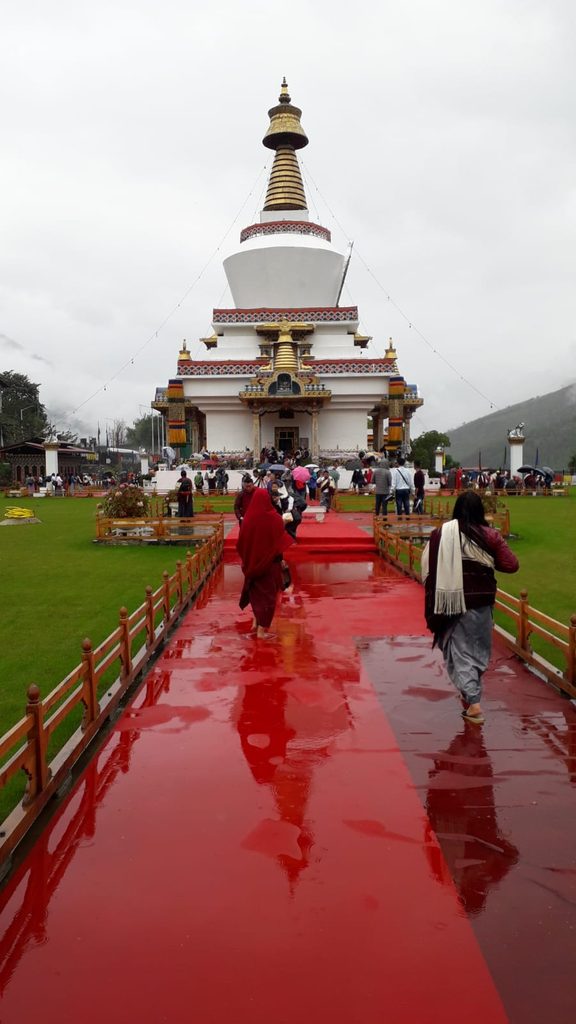
Solo Female tour to Bhutan

Can I travel to Bhutan safely alone?

Here’s the part that surprises a lot of first-time researchers: in Bhutan, “traveling alone” doesn’t mean traveling unaccompanied. Unless you hold an Indian, Bangladeshi, or Maldivian passport, Bhutan requires all foreign tourists to book through a licensed local tour operator, and a guide travels with you for the length of your trip.

This isn’t really a restriction so much as it’s baked into how Bhutan approaches tourism. The government caps visitor numbers, funds the system through a nightly Sustainable Development Fee, and channels every foreign visitor through a guide-led structure. For a solo woman, the practical effect is that you’re never actually navigating Bhutan by yourself. You have a local guide and driver with you throughout, which for many solo female travelers turns out to be one of the more comforting parts of the whole trip rather than a downside.

So the honest answer to “can I travel alone in Bhutan” is: yes, as a solo traveler, but with a guide and driver as a built-in part of the experience, not as an add-on you have to arrange yourself.

What solo travel in Bhutan actually looks like

A typical solo trip runs like this. You land in Paro, and your guide is waiting for you. From there, your guide and driver stay with you for the duration of your itinerary, whether that’s five days or two weeks. You’re not joining a big tour group full of strangers unless you choose to, and you’re not wandering the country solo either. It’s closer to having a knowledgeable local companion for your trip than either a packaged group tour or fully independent backpacking.

This matters for how you think about the “solo” part of solo travel. You won’t have the isolation that sometimes comes with solo trips elsewhere, since your guide is there for meals, hikes, temple visits, and conversation if you want it. Some solo travelers love this. Others who were hoping for more true alone time find it takes some adjusting to. It’s worth knowing which one you are before you go.

What about cost? The solo traveler question nobody loves

This is the part that catches a lot of solo travelers off guard. Bhutan’s Sustainable Development Fee is charged per person, per night, currently USD 100, regardless of whether you’re traveling solo or as part of a group. On top of that, a solo traveler typically pays a single supplement for accommodation and doesn’t get to split the guide and vehicle cost across multiple people the way a couple or small group would.

In practical terms, this means a solo trip to Bhutan usually costs meaningfully more per day than the same trip taken with a travel partner. It’s not a reason to skip the trip, but it is something to budget for honestly rather than be surprised by later. If cost is a real constraint, joining an existing small group departure (rather than a fully private solo itinerary) can bring the per-day cost down while you’re still traveling as an individual rather than with people you already know.
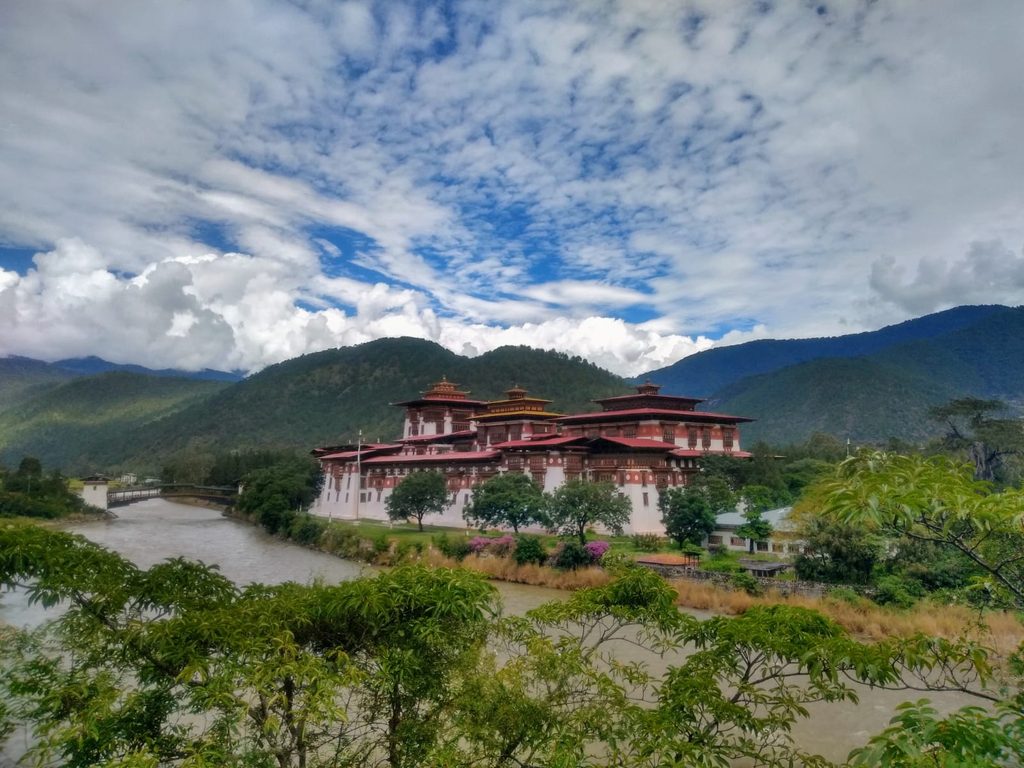
Solo travel to Bhutan

Practical safety tips for solo female travelers

Even in a country as safe as Bhutan, a few sensible habits go a long way:

  • Keep copies of your passport, visa clearance letter, and travel insurance details separate from the originals, ideally both on paper and saved digitally.
  • Bring a portable charger and a small flashlight, especially useful in rural areas or during treks where power can be less reliable.
  • Dress modestly when visiting dzongs (fortress-monasteries) and temples. This isn’t primarily a safety issue, it’s a cultural respect issue, and Bhutanese people notice and appreciate it.
  • Trust your guide, but also trust yourself. If something about a plan or a situation doesn’t sit right with you, say so. Reputable operators expect and welcome that kind of communication.
  • Get comprehensive travel insurance that covers medical evacuation, particularly if your itinerary includes trekking at altitude.
  • Keep your guide’s contact number and your tour operator’s emergency contact saved and easily accessible from the moment you land.

Cultural etiquette worth knowing

Bhutan is a conservative, Buddhist country, and a little cultural awareness goes a long way toward making your trip smoother and more respectful.

Dress modestly, particularly at religious sites. Covered shoulders and knees are expected at temples and dzongs. Public displays of affection are uncommon and best avoided. Photography inside temples is often restricted, so always ask your guide before taking pictures indoors. And while Bhutanese people are generally warm and welcoming, loud or overly assertive behavior in public can come across poorly. A calmer, more measured tone tends to be appreciated here, and it’s a good match for the country’s generally unhurried pace.

Is solo female travel in Bhutan Lonely?

It can be, at moments, though probably not in the way you’d expect. Because you’re not navigating logistics on your own, the “alone” part of your trip is less about survival and more about quiet, reflective time. Many solo travelers describe long drives through mountain valleys, or an early morning at a monastery before the crowds arrive, as some of the most meaningful parts of a Bhutan trip precisely because they’re solitary.

If you’re someone who wants to meet other travelers along the way, this is worth discussing with your operator before you book. Some itineraries can be arranged to coincide with other small groups, particularly during festival season, if a bit of built-in social contact is something you’re hoping for.

Best time for solo female travelers to visit Bhutan

Spring (March to May) and autumn (September to November) are generally considered the best windows, both for clear mountain views and for coinciding with Bhutan’s colorful tshechu festivals. These seasons also tend to have more established solo and small-group departures running, if traveling alongside a few other travelers appeals to you.

Frequently Asked Questions

Is Bhutan safe for solo female travelers? Yes. Bhutan has a low crime rate and a cultural climate where harassment of foreign women is uncommon. Combined with the guide-accompanied tourism structure, it’s considered one of the more reassuring destinations in Asia for solo women.

Can I travel to Bhutan safely alone as a woman? Yes. You’ll travel with a licensed guide and driver throughout your trip, which is a requirement for all foreign tourists except those from India, Bangladesh, and the Maldives. This means you’re never navigating the country fully unaccompanied.

Do I need to join a group tour, or can I book a private solo trip? Both options exist. A private solo itinerary gives you full control over pace and route but costs more per day. Joining a scheduled small-group departure lowers the cost and adds some social contact, while you’re still traveling as an individual.

Is it more expensive to travel to Bhutan alone? Generally, yes. The nightly Sustainable Development Fee is the same regardless of group size, but a solo traveler doesn’t split guide and vehicle costs with anyone else, and typically pays a single-room supplement.

Will I be with my guide the entire time, or do I get any time alone? Your guide accompanies you for planned activities, but you can usually arrange quiet time on your own, particularly in the evenings at your hotel. Discuss your preferences with your operator when planning the itinerary.

What should I pack as a solo female traveler to Bhutan? Modest clothing for temple visits, warm layers (Bhutan’s weather shifts quickly with altitude), comfortable walking shoes, a portable charger, and copies of your important documents.

Are there specific areas or situations I should avoid as a solo woman? Nothing unusual by general travel-safety standards. Late-night solo walks in unfamiliar areas are best avoided, as they would be almost anywhere, but this isn’t a Bhutan-specific concern so much as ordinary travel sense.

Is Bhutan a good first solo trip for someone who’s never traveled alone before? It’s actually a strong option for a first solo trip, precisely because the guided structure removes a lot of the logistical stress that makes independent solo travel intimidating for beginners.

Thinking about a solo tour to Bhutan?

Every solo traveler has a slightly different idea of what they want out of a trip like this: some want a fully private, unhurried pace, others want the social element of a small group, and cost is a real factor either way. Send us an inquiry with your travel dates and what kind of experience you’re after, and we’ll help you put together a solo itinerary, or point you toward an upcoming small-group departure, that actually fits what you’re looking for.
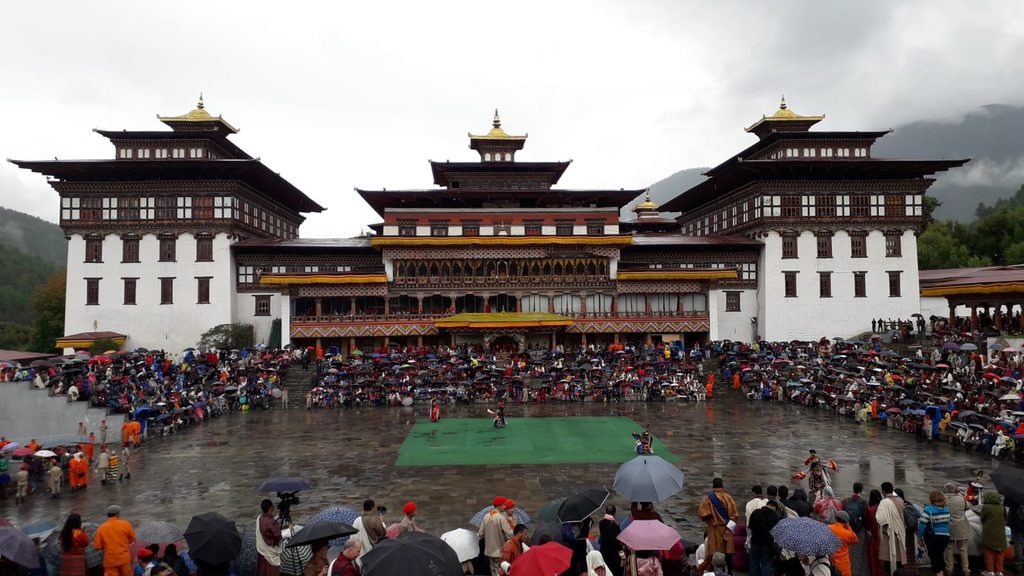
Best Time to Visit Bhutan: Month-by-Month Guide with Festival Calendar 2027

If you’re trying to pin down exactly when to book your Bhutan trip, here’s the short version: March to May and September to November are the best months to visit Bhutan, thanks to clear mountain views, mild temperatures, and the country’s biggest Tshechu festivals. October is the single strongest all-round month, combining dry weather with the Thimphu Tshechu, one of Bhutan’s most spectacular celebrations.

That said, “best” depends on what you’re after. Trekkers, festival chasers, and budget-conscious travelers will each land on a slightly different answer, and Bhutan’s Tshechus follow the lunar calendar, so exact 2027 dates shift by weather season too. This guide breaks it all down month by month, with a full 2027 festival calendar you can plan around.

Quick Answer: Best Time to Visit Bhutan

  • Best overall: October and March, for clear skies, comfortable temperatures, and the year’s major festivals
  • Best for trekking: Late September to November (post-monsoon, stable trails) or March to April (spring, but higher passes may still hold snow)
  • Best for festivals: February to April and September to December, when most Tshechus are held
  • Best for fewer crowds and lower rates: June, July, and January
  • Avoid if possible: Mid-June through August, when the monsoon brings heavy rain, landslide risk on mountain roads, and reduced valley visibility

What Is Bhutan’s Climate Like Through the Year?

Bhutan’s weather varies sharply with altitude, but for the valleys most travelers visit (Paro, Thimphu, Punakha, Bumthang), the country has four broad seasons:

SeasonMonthsWhat to Expect
SpringMarch – MayMild days, cool nights, rhododendrons blooming, occasional showers
Summer / MonsoonJune – AugustWarm, humid, heavy rainfall, lush green valleys, landslide risk on some roads
AutumnSeptember – NovemberBhutan’s clearest, driest stretch; crisp air and the best mountain views
WinterDecember – FebruaryCold, dry, sunny days in the valleys; snow at higher altitudes and passes

Bhutan Month-by-Month Weather and Travel Guide

January

Cold and dry in the valleys, with daytime temperatures around 10 to 15°C in Paro and Thimphu, dropping close to freezing at night. Skies are generally clear, making it a good month for photography and quiet sightseeing. Festival activity is minimal in January, which makes it appealing for travelers who want Bhutan without the crowds.

February

Still cold but noticeably drier and sunnier than winter in many other Himalayan destinations. This is when the festival calendar starts picking up, with Punakha’s Drubchen and Tshechu among the year’s most important events. Punakha valley, at a lower altitude than Thimphu, is also considerably milder this month.

March

One of the best months to visit Bhutan. Rhododendrons and magnolias begin blooming, daytime temperatures climb into the high teens Celsius, and the country’s most famous festival, the Paro Tshechu, typically falls in this window. Expect higher demand for flights and hotels around festival dates.

April

Spring is in full swing, with wildflowers across the valleys and comfortable trekking conditions at lower and mid altitudes. Central Bhutan festivals such as the Ura Yakchoe usually take place this month. Some early-season showers are possible but rarely disruptive.

May

Warmer and greener, with occasional pre-monsoon rain showers. Fewer travelers than March and April, which suits people who want a quieter trip while conditions are still favorable. A good month for lower-altitude hikes before the monsoon arrives.

June

The monsoon typically begins in June, bringing regular rainfall, high humidity, and lush landscapes. Some remote roads can be affected by landslides. Tourist numbers drop noticeably, and this is one of the better months for value, with lower rates at many hotels.

July

Peak monsoon month. Expect frequent rain, especially in the afternoons, though mornings are often clear enough for sightseeing. Central and eastern Bhutan generally see less rainfall than the west. Not the ideal season for trekking above the tree line.

August

Rainfall usually starts easing toward the end of the month. Valleys are at their greenest, and this remains a low season for tourism, which can mean better availability for travelers with flexible plans.

September

The shift toward autumn begins, with rainfall tapering and skies clearing progressively through the month. Several district Tshechus, including Wangdue and Gangtey, typically fall in this period.

October

Widely considered the best month to visit Bhutan. Dry air, clear mountain views, and comfortable daytime temperatures coincide with the Thimphu Tshechu, the country’s largest festival, along with Jakar and other regional celebrations. Book accommodation and flights well ahead, since this is Bhutan’s busiest month.

November

Still dry and clear, with cooler temperatures than October. The Black-Necked Crane Festival in Phobjikha Valley, tied to the annual arrival of the birds rather than the lunar calendar, usually falls in mid-November and is a highlight for wildlife-minded travelers.

December

Cold but generally dry and sunny in the valleys, with snow possible at higher elevations. The Druk Wangyel Tshechu at Dochula Pass is the standout event, held every year on the 13th. A calmer month overall, good for travelers who prioritize quiet, scenic trips over festival crowds.

Bhutan Festival Calendar 2027

Bhutan’s Tshechus follow the lunar calendar, so exact dates are confirmed by the Tourism Council of Bhutan roughly six months in advance. The dates below reflect the most current available calculations for 2027 and should be reconfirmed closer to your travel dates.

FestivalLocationTentative 2027 Dates
Punakha Drubchen & DromchoePunakha Dzong13 – 15 February
Punakha TshechuPunakha Dzong16 – 18 February
Tharpaling ThongdrolBumthang20 February
Chorten Kora FestivalTrashiyangtse20 February & 8 March
Talo TshechuTalo, Punakha16 – 18 March
Gomphu KoraTrashiyangtse16 – 18 March
Paro TshechuRinpung Dzong, Paro18 – 22 March
Ura YakchoeUra, Bumthang18 – 22 April
Rhododendron FestivalVarious (Thimphu / Merak)Early to late April (final dates pending)
Nimalung & Kurjey TshechuBumthang12 – 14 June
Wangdue TshechuWangdue Phodrang8 – 10 October
Thimphu TshechuTashichho Dzong, Thimphu10 – 12 October
Gangtey TshechuGangtey Gonpa, Phobjikha13 – 15 October
Black-Necked Crane FestivalPhobjikha ValleyMid-November (fixed to bird arrival, not lunar)
Druk Wangyel TshechuDochula Pass13 December
Best Time to Visit Bhutan: Month-by-Month Guide + 2027 Festival Calendar

A few festivals, including the Haa Summer Festival and the Jambay Lhakhang Drup, had not published confirmed 2027 dates at the time of writing. We’ll update this calendar as the Tourism Council of Bhutan releases them.

Best Time to Visit Bhutan for Trekking

If trekking is the main goal, late September through November offers the most stable weather and the clearest high-altitude views, once the monsoon clears. March and April are the second-best window, with milder temperatures than autumn but a higher chance of residual snow on higher passes like those on the Druk Path or Jomolhari treks. Avoid June through August for anything above the tree line, since monsoon rain and cloud cover reduce both trail conditions and visibility.

Best Time to Visit Bhutan on a Budget

June, July, and January are Bhutan’s quietest months for tourism, which generally means more room availability and, on some packages, softer rates. Bhutan’s Sustainable Development Fee (SDF) itself does not change with season, but the current discounted SDF rate of USD 100 per person, per night is scheduled to run through August 2027, after which it is expected to revert to USD 200. Travelers planning a 2027 trip should factor this into their booking timeline regardless of which month they choose.

Bhutan Best Time to Visit: Month-by-Month Quick Reference

MonthWeatherCrowd LevelNotable For
JanuaryCold, dryLowQuiet sightseeing, clear skies
FebruaryCold, dryLow-MediumPunakha Tshechu
MarchMild, dryHighParo Tshechu, spring blooms
AprilMildHighUra Yakchoe, trekking season begins
MayWarm, occasional rainMediumLower-altitude hikes
JuneMonsoon beginsLowValue season
JulyPeak monsoonLowLush scenery, budget travel
AugustMonsoon easingLowFlexible, low-cost travel
SeptemberClearingMediumWangdue and Gangtey Tshechus
OctoberDry, clearVery HighThimphu Tshechu, best mountain views
NovemberDry, coolHighBlack-Necked Crane Festival
DecemberCold, dryMediumDruk Wangyel Tshechu

Frequently Asked Questions

What is the single best month to visit Bhutan? October is generally considered the best month, combining dry, clear weather with the Thimphu Tshechu, Bhutan’s largest festival.

When is the rainy season in Bhutan? The monsoon typically runs from June through August, with the heaviest rainfall in July.

Can I visit Bhutan in winter? Yes. December through February is cold but dry and sunny in the main valleys, and it’s a good option for travelers who prefer smaller crowds over festival season.

Do Bhutan festival dates change every year? Yes. Most Tshechus follow the Bhutanese lunar calendar, so their Gregorian dates shift from year to year. The Tourism Council of Bhutan typically confirms exact dates about six months ahead.

Is Bhutan crowded during Paro and Thimphu Tshechu? These are Bhutan’s two most popular festivals, and hotels in Paro and Thimphu can book out well in advance of the dates, sometimes over a year ahead for peak properties. Booking early is recommended if you want to attend.

What should I pack depending on the season? Layers work year-round. Winter and early spring call for a warm jacket and thermal layers, monsoon season calls for rain gear and quick-dry clothing, and autumn is generally comfortable with a light jacket for mornings and evenings.

Planning Your Bhutan Trip Around the Festival Calendar

If a specific Tshechu is the centerpiece of your trip, we recommend building your itinerary around the festival rather than the other way around, since dates get finalized only a few months out and accommodation near major dzongs fills up early. This pairs well with our guides on Bhutan’s Sustainable Development Fee and visa process, and for travelers combining regions, with our comparison of Tibet and Bhutan itineraries.

Planning a 2027 trip to Bhutan? Get in touch with our team for a festival-aligned itinerary, current SDF guidance, and a Bhutan tour built around the exact dates that matter to you.

Group joining vs private Mt Kailash tour: Pros, Cons & Pricing

A group joining Mt Kailash tour puts you on a fixed departure date alongside other travelers, sharing the cost of permits, transport, and guide, which makes it the more affordable option, typically starting from around USD 1,400 to 2,000 per person depending on season and departure. A private Mt Kailash tour is arranged exclusively for you or your own group, with flexible dates and a pace you control, but at a higher per-person cost since those same fixed costs aren’t shared across a larger group. Most first-time pilgrims and budget-conscious travelers choose group joining; those prioritizing flexibility, privacy, or a specific departure window tend to choose private.

What Is a Group Joining Mt Kailash Tour?

A group joining tour is a fixed-departure trip: the operator sets specific dates in advance, and individual travelers or small parties book onto that shared departure. You’ll travel with a group of pilgrims and trekkers you likely haven’t met before, all following the same itinerary, guide, and vehicle.

Because the fixed costs of a Kailash trip, including permits, guide fees, vehicle rental, and yak or porter support, are split across everyone in the group, this is consistently the more budget-friendly way to reach Kailash.

What Is a Private Mt Kailash Tour?

A private tour is arranged exclusively for you, your family, or your own travel party. You choose (within seasonal constraints) your own departure date, set your own pace, and the itinerary can be adjusted to your preferences: extra rest days, a different route combination, or add-ons like Lhasa or Everest Base Camp built around your schedule rather than a fixed group calendar.

The trade-off is straightforward: since you’re not sharing costs with other travelers, the per-person price is meaningfully higher.

Side-by-Side Comparison

Group Joining TourPrivate Tour
Departure datesFixed, pre-scheduled datesFlexible: choose your own dates within the season
Price per personLower, since costs are shared across the groupHigher, since costs are borne by your party alone
Group sizeTypically joins other travelers (often 4+ pax)Just you and/or your own party
PaceSet by the group itineraryCan be adjusted to your preferences
Itinerary flexibilityFixed, standard routeCustomizable: extra days, different add-ons
Best forSolo travelers, budget-conscious pilgrims, first-timersFamilies, groups of friends, travelers with specific dates or needs
Booking lead timeNeeds to align with existing departure datesMore flexible, though permits still need 30+ days

Pros and Cons of Group Joining Tours

Pros:

  • Significantly more affordable per person
  • A built-in social element, since many pilgrims value sharing the experience with others on the same spiritual journey
  • Simpler decision-making, since the itinerary and logistics are already set
  • Easier for solo travelers, since you’re automatically placed with a group rather than needing to find travel companions

Cons:

  • You’re locked into the operator’s fixed departure dates
  • Pace is set by the group, so extra rest days or a slower schedule are harder to arrange
  • Less control over exactly who you’re traveling with
  • Itinerary customization (adding Lhasa, Everest Base Camp, or extra days at Manasarovar) is limited or unavailable

Pros and Cons of Private Tours

Pros:

  • Full control over departure dates within the travel season
  • Itinerary can be tailored, with extra acclimatization days, different combinations with Lhasa or Everest, or a slower or faster pace
  • Travel exclusively with people you know
  • More flexibility if health, age, or fitness considerations call for a more cautious pace

Cons:

  • Meaningfully higher cost per person, since fixed costs aren’t shared across a larger group
  • Requires more advance planning and communication to build a custom itinerary
  • Smaller parties may find some costs (vehicle, guide) less efficient than a full group

How Does Pricing Actually Compare?

Group joining Kailash tours from Kathmandu typically range from around USD 1,400 to 2,000+ per person, varying by season, departure date, and accommodation standard. This usually covers Tibet Travel Permit and Alien’s Travel Permit processing, guide, transport, twin-sharing accommodation on a bed-and-breakfast basis, and emergency oxygen support, with lunch, dinner, insurance, and visa fees charged separately.

Private tours are priced per group rather than per person against a fixed rate, since the same core costs (permits, guide, vehicle, yak support) are spread across fewer travelers. As a rough guide, expect private tour pricing to run noticeably higher per person than the group joining rate, with the exact figure depending heavily on your group size: a private tour for a family of 4 works out quite differently than a private tour for a couple.

Because private pricing is genuinely itinerary-dependent, it isn’t something that fits neatly into a fixed number. The most accurate way to get a real figure is to share your group size and preferred dates directly.

Which One Should You Choose?

Choose a Group Joining Tour if:

  • Budget is a primary consideration
  • You’re traveling solo or as a couple and don’t mind joining other pilgrims
  • The operator’s existing departure dates work with your schedule
  • You’re comfortable with a standard, well-tested itinerary

Choose a Private Tour if:

  • You’re traveling with family or a group of friends and want to stay together exclusively
  • You need specific dates that don’t align with fixed group departures
  • You want a customized itinerary, extra rest days, a different combination with Lhasa or Everest, or a gentler pace for older travelers
  • Cost is a lower priority than flexibility and control

Frequently Asked Questions

Is a group joining tour safe for solo travelers, especially women? Yes. Group joining tours are a common and popular way for solo travelers to do the Kailash Kora, since you’re automatically part of a supervised group with an experienced guide throughout.

Can I upgrade from group joining to private after booking? This depends on timing and availability, since permits and itinerary planning differ between the two formats. If you’re unsure, it’s worth discussing your priorities with your operator before booking either option.

Does a private tour mean better accommodation? Not necessarily. Accommodation standard (budget vs. upgraded) is usually a separate choice from group vs. private format. A private tour gives you control over dates and pace; accommodation upgrades are typically an additional option on either format.

How much more expensive is a private tour compared to group joining? It varies significantly based on your group size, since fixed costs are spread across fewer people. A private tour for a larger family group can end up reasonably close to group joining rates per person, while a private tour for just one or two people will cost considerably more per head.

Can I customize a group joining tour itinerary? Generally no. The appeal of a group joining tour is the fixed, already-optimized itinerary. If customization matters to you, a private tour is the better fit.

Which option is more common for first-time Kailash pilgrims? Group joining tours are generally more popular among first-time visitors, largely due to cost and the reassurance of a well-established, repeatedly-run itinerary.

Ready to Choose Your Kailash Tour Format?

If budget-friendly and straightforward is what you’re after, take a look at our Mt Kailash Group Joining Tour 2027 for current departure dates and pricing. If you’d prefer a private, customized journey, with your own dates, pace, and itinerary additions, send us an inquiry with your group size, preferred travel window, and any specific requirements, and we’ll put together a private quote tailored to your trip.

Mount Kailash Permits & Travel Requirements Guide (2027)

A trip to Mount Kailash requires more paperwork than a standard Tibet trip because the region — Ngari Prefecture — is a restricted, military-sensitive border area. Foreign travelers typically need a Chinese Visa (or China Group Visa via Nepal), a Tibet Travel Permit, an Alien’s Travel Permit, and a Military Area Entry Permit, with a Foreign Affairs Permit also required on some routes. None of these can be arranged independently — all are processed by a licensed Tibet travel agency. Restricted-area permits for Kailash typically take 20–30 days to process, longer than a standard Lhasa-only trip, so booking at least 2–3 months ahead is recommended.

Why Does Mount Kailash Need Extra Permits?

Mount Kailash sits in Ngari Prefecture, in the far western corner of the Tibet Autonomous Region, close to where the borders of China, Nepal, and India meet. Because of that location, Ngari is classified as a military-sensitive zone, which means it requires permits on top of the standard Tibet Travel Permit that covers a normal Lhasa trip.

This is the single biggest reason a Kailash trip needs more lead time than, say, a Lhasa-and-Everest itinerary — the additional permits take longer to process and involve more government departments.

The Full List of Permits for Mount Kailash

PermitIssued ByPurpose
Chinese Visa (or China Group Visa)Chinese Embassy/Consulate, or via Kathmandu for the Nepal routeEntry into China
Tibet Travel Permit (TTP)Tibet Tourism BureauEntry into the Tibet Autonomous Region
Alien’s Travel Permit (ATP)Public Security BureauTravel beyond Lhasa into western Tibet, including Ngari
Military Area Entry PermitMilitary authorities, LhasaAccess to Ngari Prefecture specifically
Foreign Affairs PermitForeign Affairs Office, LhasaRequired on some routes into Ngari, alongside the Military Permit

Most foreign travelers visiting Kailash end up needing all of the above, though the exact combination can depend slightly on which route you’re taking into the region — more on that below.

Does the Route You Take Change What You Need?

Yes, and this is a detail a lot of generic guides skip over.

Via Kathmandu (Nepal overland route): This is the route most travelers on a group joining tour take. You’ll need a China Group Visa (arranged in Kathmandu), plus the Tibet Travel Permit, Alien’s Travel Permit, and Military Area Entry Permit.

Via Lhasa (starting from mainland China): Because this route passes through several additional prefectures on the way to Ngari, it more commonly also requires the Foreign Affairs Permit alongside the Military Permit.

Since permit combinations are genuinely route-dependent, the most reliable approach is to lock in your exact itinerary first and let your travel agency confirm precisely which permits apply — rather than assuming your friend’s permit list from a different route matches yours.

Permit Timeline: How Long Does It Take?

For a Kailash trip, plan for the process to take noticeably longer than a standard Tibet permit:

  • Standard Tibet Travel Permit alone: around 15–20 working days
  • Kailash/Ngari permits (TTP + Alien’s Travel Permit + Military Permit, and Foreign Affairs Permit where applicable): typically 20–30 working days

A reasonable planning timeline looks like this:

  1. 2–3 months before departure: Confirm your itinerary and book with a licensed Tibet agency — this is when the permit clock starts.
  2. 60–30 days before departure: Submit your passport scan and required documents to your agency.
  3. 20–30 days before departure: Restricted-area permits for Ngari are processed.
  4. Around 15–20 days before departure: Your agency should have all approved permits in hand and confirm everything with you.

Because Ngari permits involve more government departments than a standard Lhasa trip, it’s worth building in a buffer rather than cutting it close — permit delays are far easier to absorb with extra lead time than with none.

What Documents Will You Need to Provide?

  • A scanned copy of your passport’s photo page, valid for at least six months beyond your travel dates
  • A recent passport-style photo
  • A copy of your Chinese visa, or confirmation of your visa-free eligibility if applicable
  • Your confirmed Kailash tour itinerary and dates
  • For Indian nationals specifically: additional documentation processed through recognized channels working with the Tibet Autonomous Region’s Foreign Affairs Office, since the process for Indian pilgrims differs somewhat from other nationalities

A Note for Indian Pilgrims

Mount Kailash and Lake Manasarovar draw a significant number of Indian pilgrims each year, and the permit process for Indian nationals runs through a slightly different channel than for other foreign travelers — typically coordinated between Nepali or Indian travel agencies with established ties to the relevant Tibetan authorities. If you’re an Indian passport holder, it’s worth confirming with your agency early that they have direct experience processing Kailash permits for Indian pilgrims specifically, since this isn’t identical to the general foreign-traveler process.

Common Permit Mistakes to Avoid

  • Booking flights before permits are confirmed. Since permits are itinerary-specific and take weeks to process, buying non-refundable flights too early creates unnecessary risk if anything needs adjusting.
  • Assuming visa-free entry to China removes the need for Tibet permits. It doesn’t — Tibet Travel Permits and Ngari-specific permits are required regardless of your visa status.
  • Changing your itinerary after permits are submitted. Because permits are matched to a specific route, last-minute itinerary changes can mean re-processing, which costs time you may not have.
  • Assuming all Kailash routes need identical permits. As covered above, the Kathmandu route and the Lhasa route don’t always require exactly the same combination.

Frequently Asked Questions

How many permits do I need for Mount Kailash? Most foreign travelers need four documents on top of their passport: a Chinese Visa (or Group Visa), a Tibet Travel Permit, an Alien’s Travel Permit, and a Military Area Entry Permit, with a Foreign Affairs Permit required on some routes.

Can I apply for Kailash permits myself? No. All permits for Tibet, and especially for restricted areas like Ngari, must be processed through a licensed Tibet travel agency. Independent travel to Kailash isn’t permitted for foreign visitors.

How far in advance should I start the permit process for Kailash? At least 2–3 months before departure is recommended, given that restricted-area permits for Ngari can take 20–30 working days to process, on top of time needed to confirm your itinerary and gather documents.

Do visa-free travelers still need Kailash-specific permits? Yes. Visa-free entry to China only addresses your entry into the country — it doesn’t remove the requirement for a Tibet Travel Permit or the additional Ngari-specific permits.

Is the permit process different if I’m traveling via Kathmandu instead of Lhasa? Yes, to some degree. The Kathmandu route typically involves a China Group Visa and generally doesn’t always require the Foreign Affairs Permit that some Lhasa-route itineraries need, though the Tibet Travel Permit, Alien’s Travel Permit, and Military Permit apply either way.

What happens if my itinerary changes after permits are submitted? Since permits are matched to your specific route and dates, significant itinerary changes can require re-submission, which adds processing time. It’s best to finalize your route before permits are filed.

Is the permit process different for Indian pilgrims? Yes. Indian nationals typically go through a separate coordination channel involving recognized agencies with established ties to the relevant Tibetan authorities, distinct from the general international traveler process.

Ready to Start Your Kailash Permit Process?

Because Kailash permits are route-specific and take longer than standard Tibet permits, the earlier you lock in your itinerary, the smoother the process. Our Mt Kailash Group Joining Tour 2027 includes permit processing as part of the package. Send us an inquiry with your nationality, passport type, and preferred travel dates, and we’ll map out exactly which permits your trip needs and the timeline to get them.

A message to our travelers’ families, and everyone affected by the Nepal–Tibet flash floods

We are writing this with heavy hearts.

On the morning of August 26, 2026, a catastrophic glacial-triggered flash flood swept down the Bhote Koshi/Trishuli river corridor along the Nepal–Tibet border, devastating Rasuwa, Nuwakot, Dhading, Gorkha, and several other districts. Entire villages, roads, bridges, and hydropower projects were washed away in a matter of minutes. This is one of the worst natural disasters our region has faced in recent memory, and its scale is still becoming clear.

We are sharing this update because our own travelers and staff were among those caught in this disaster, and because we know there are many other families — of tourists, of trekking staff, of local residents — who are searching for the same answers we are.

Our Group

Our tour was organized as an authorized Tibet travel agency since 2000 consisting of 72 people in total — 58 travelers and 14 of our own guides and support staff — who were completing the final day of their journey, returning from Tibet and crossing back into Nepal.

Our last confirmed contact with the group was at approximately 8:30 AM on August 26, when they were at the immigration checkpoint attempting to cross the border into Nepal. We have not been able to reach them since.

We want to be completely honest with you: we do not have further confirmed information beyond this point. We are in continuous contact with Nepali authorities, our local partner, and emergency responders, and we will share any verified update — positive or otherwise — the moment we receive it. We will not speculate, and we ask for patience as search and rescue teams work through extraordinarily difficult conditions.

The Scale of This Disaster

This flood did not affect only travelers. According to Nepal’s National Disaster Risk Reduction and Management Authority (NDRRMA) and international reporting, the disaster has caused massive loss of life across multiple districts, with many hundreds of people — locals and foreign nationals alike — still unaccounted for. Dozens of bridges, tens of kilometers of road, hydropower infrastructure, and entire settlements along the river have been destroyed, severely hampering rescue efforts. Search, rescue, and recovery operations by the Government of Nepal, the Nepal Army, Nepal Police, and international responders are ongoing.

We want to say clearly: our thoughts are not only with our own travelers and team, but with every family — Nepali and foreign — who is waiting for news of someone they love, and with the local communities who have lost homes, livelihoods, and family members in this disaster.

Guidance for Families With a Missing Loved One (Including Those Not Traveling With Us)

If you have a family member who was in the affected region and you have not yet had contact with them, whether or not they were part of any organized tour, we strongly encourage you to reach out to the following official channels directly:

  • Nepal Police – for reporting missing persons and coordinating DNA identification
  • Nepal Tourism Board – toll-free: 1234 | hotline: 1144 | Tourist Police: 9851289445
  • Department of Hydrology and Meteorology – toll-free 1155 for flood and weather updates
  • Your country’s embassy or consulate in Kathmandu, which can coordinate with Nepali authorities on your behalf
  • Nepal Red Cross Society, which is assisting with tracing and family reunification

If your relative was traveling with a different tour operator, please also contact that company directly, as they may have last-known location or contact details that can help authorities narrow the search.

DNA Sampling for Identification of Recovered Bodies

Because of the scale of this disaster and the condition in which many bodies have been recovered, the Government of Nepal has asked families of missing persons — including those living outside Nepal — to submit DNA samples to support identification. This is a standard and necessary forensic process, and we understand how painful it is to even read about it. We share it only because Nepal’s disaster authorities have specifically requested this information reach families abroad who may not otherwise know the process exists.

According to the official notice issued by Nepal’s National Disaster Risk Reduction and Management Authority (NDRRMA), the process is as follows:

  • DNA samples should be provided by the closest available blood relative of the missing person, in this order of preference: mother, father, son, or daughter, followed by a biological brother or sister sharing both parents. If none of these are available, another blood relative from the same family may provide a sample.
  • Spouses, adopted family members, step-relatives, and in-laws cannot be used, as they do not share DNA with the missing person.
  • Families must also submit a copy of the donor’s photo ID (passport or national ID) and a signed consent letter authorizing use of the DNA sample solely for identification purposes, and specifying the donor’s relationship to the missing person.
  • Scanned documents and DNA reports should be sent to the Nepal Police. Samples are processed at the Nepal Police Forensic Science Laboratory, with additional support from the Nepal Academy of Science and Technology and international forensic teams.
  • Authorities have confirmed this information is kept strictly confidential and used only for identification.

We want to gently note, as Nepali authorities and foreign embassies have also stated: being asked to provide a DNA sample does not mean a body has been identified as your loved one, and it does not mean any conclusion has been reached about their status. It is a precautionary step being requested of all families with a missing relative, given how many bodies have needed to be recovered and, due to urgent public health requirements, buried before identification could be completed.

If you are a family member seeking to begin this process, please contact the Nepal Police or your embassy in Kathmandu for the current submission procedure, as details may be updated as the response continues.

Supporting the Recovery

This disaster has affected far more than any one group of travelers. Entire communities have lost homes, roads, bridges, and the infrastructure they depend on for daily life. The Government of Nepal, through the Office of the Prime Minister and Council of Ministers, has appealed for public support toward rebuilding through two official channels:

  • Prime Minister’s Disaster Relief Fund (प्रधानमन्त्री दैवी प्रकोप उद्धार कोष)
  • Prime Minister’s Relief Fund (प्रधानमन्त्री राहत कोष)

Donations can be made securely through the official government portal: https://pmdrf.nchl.com.np/

By law, these funds may only be used for rescue, treatment, relief, rehabilitation, and infrastructure restoration. We encourage anyone who is able to contribute, whether a small amount or a large one, to do so through this official channel, and to be cautious of unofficial or unverified fundraising pages.

A Word on Why This Happened

Early assessments from Nepali and international authorities point to a glacial collapse near Langtang Lirung, which triggered this catastrophic chain of debris flows and flash flooding. Events like this are becoming more frequent across the Himalayas as glaciers retreat and high-altitude ice and rock formations destabilize in a warming climate. This is not an isolated tragedy — it is part of a pattern that scientists have been warning about for years.

We say this not to politicize a moment of grief, but because we believe it matters: if we do not take the protection of these fragile mountain environments seriously, more communities, more travelers, and more families will face what so many are facing right now. Conserving the natural systems we all depend on is not an abstract cause. It is, quite literally, about protecting human lives.

To Every Family Still Waiting

To the families of our own 58 travelers and 14 team members, and to every family, Nepali or foreign, still waiting for word of someone they love: we see you, and we will not stop seeking information until we have real answers for you. To the families of the local residents, guides, drivers, and hydropower workers who lived and worked in these valleys and who are among the dead and missing, our grief extends to you as well. This land is not just a route through the mountains to us. It is home to people we have worked alongside for years.

We will continue to update this page as we receive verified information. If you are a family member of someone in our group and need to reach us directly, please contact us at info@tibettour.travel

Official Sources and Resources Referenced