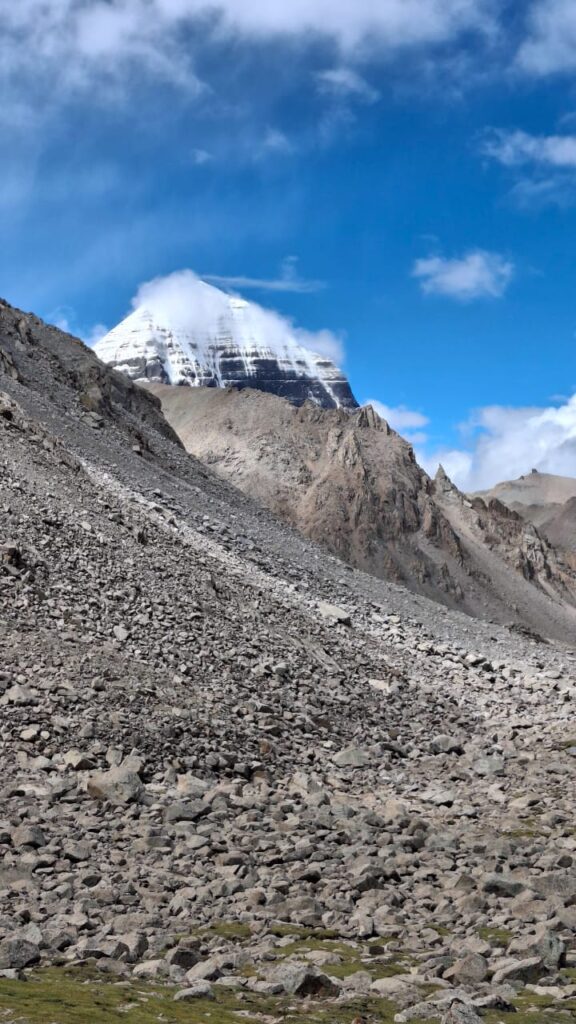
The Mount Kailash Kora is a 52-kilometer pilgrimage circuit around Mount Kailash (6,638m) in western Tibet, sacred to Hindus, Buddhists, Jains, and Bon practitioners. Most travelers complete the Outer Kora in 3 days, crossing the demanding Dolma La Pass at roughly 5,630m. It requires a Chinese Visa, Tibet Travel Permit, Alien’s Travel Permit, and Military/Kailash Special Permit — all arranged through a licensed Tibet travel agency, since independent travel isn’t permitted. A full trip from Lhasa typically takes 13–18 days; from Kathmandu, group joining tours run around 10 days, with fuller itineraries up to 14 days. Best season is May through September, with Saga Dawa festival departures especially popular among pilgrims. Costs for a Kathmandu-based group joining tour typically run USD 2,000–3,500 per person.
What Is the Mount Kailash Kora?
“Kora” is the Tibetan word for a circumambulation — a ritual walk around a sacred site. Mount Kailash, at 6,638 meters in the remote Ngari Prefecture of western Tibet, is considered so holy that no one is permitted to climb it. Instead, pilgrims and travelers walk around its base, a practice believed across multiple faiths to bring spiritual merit.
What makes Kailash unusual is that it’s revered by four separate traditions at once: Hinduism, Tibetan Buddhism, Jainism, and the indigenous Bon religion. Each tradition has its own explanation for the mountain’s significance, but all treat the kora as one of the most meaningful pilgrimages a person can make.
Where Is Mount Kailash?
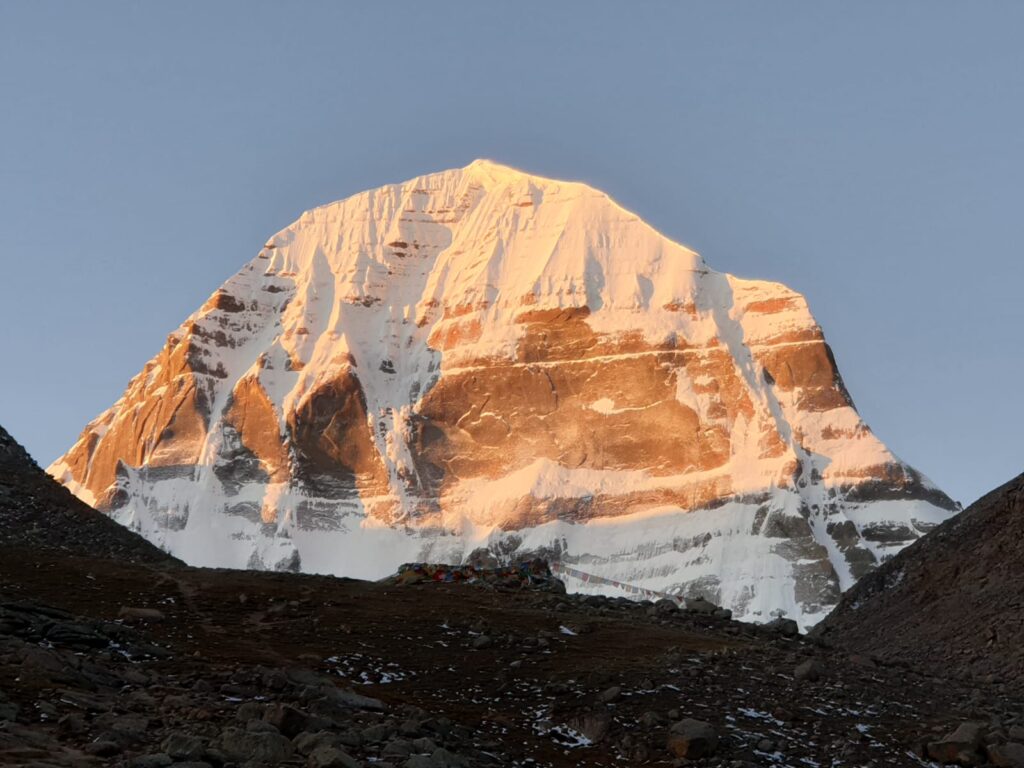
Mount Kailash sits in Burang County, Ngari Prefecture, in the far western part of the Tibet Autonomous Region, near the sacred Lake Manasarovar. It’s remote even by Tibetan standards — the nearest service town, Darchen, sits at around 4,600–4,700 meters and serves as the starting and ending point for the kora.
Getting there is part of the undertaking itself: from Lhasa, the overland journey to Darchen typically takes several days, passing through Shigatse and Saga across the high plateau of western Tibet.
Outer Kora vs. Inner Kora
| Outer Kora | Inner Kora | |
|---|---|---|
| Distance | ~52 km | ~34 km |
| Duration | Typically 3 days | Longer, more technical |
| Difficulty | Moderate to challenging | Significantly harder |
| Highest point | Dolma La Pass, ~5,630m | Similar or higher, varies by route |
| Access for foreign travelers | Standard part of most tours | Currently restricted — access has been limited to a short section near Selung Monastery in recent years |
| Traditional belief | The standard pilgrimage circuit | Traditionally meant to be walked only after completing the Outer Kora 13 times |
For almost all travelers, “doing the Kailash Kora” means the Outer Kora. The Inner Kora is a separate, far more demanding undertaking, and access rules for foreign trekkers have changed in recent years — always confirm current restrictions with your operator before planning around it.
The Outer Kora Route, Day by Day
A standard 3-day Outer Kora breaks down roughly like this:
Day 1: Darchen to Dirapuk (approx. 20 km) A relatively gentle start following the Lha Chu valley, with your first close-up views of Kailash’s north face. Overnight at Dirapuk Monastery guesthouse, around 4,900m.
Day 2: Dirapuk to Zutulpuk via Dolma La Pass (approx. 22 km) The hardest day by far. This involves a steep pre-dawn climb to Dolma La Pass at roughly 5,630–5,663 meters — the high point of the entire kora — followed by a long descent to Zutulpuk. Most trekkers start walking in the dark to reach the pass by mid-morning, before winds pick up.
Day 3: Zutulpuk back to Darchen (approx. 10 km) A shorter, easier final day back to Darchen, where most travelers rejoin their vehicle for the next leg of their Tibet itinerary.
Some travelers and pilgrims complete the entire kora in a single very long day, but this is a serious physical undertaking and not recommended for most first-time visitors.
How Difficult Is the Kailash Kora?
Most of the trek takes place above 4,500 meters, and the Dolma La Pass crossing at over 5,600m is genuinely demanding — the air there holds roughly half the oxygen available at sea level. That said, it’s generally rated as a moderate to challenging trek, not an extreme mountaineering expedition. You’re walking, not climbing, and porters or yaks can carry your gear on most organized tours.
The real challenge isn’t technical skill — it’s altitude. Good acclimatization before you arrive at Darchen makes a much bigger difference to how the kora feels than raw fitness does.
Factors that affect difficulty:
- Altitude and thinner air, especially at Dolma La Pass
- Cold temperatures, which can drop well below freezing at night even outside winter
- Multiple consecutive days of walking after an already long overland journey to reach Darchen
- Unpredictable mountain weather, including sudden snowfall even in warmer months
For more on preparing your body for the altitude specifically, see our guide to altitude sickness in Tibet.
What Permits Do You Need for Mount Kailash?
Because Ngari Prefecture is a sensitive border region, a Kailash trip requires more paperwork than a standard Lhasa-only Tibet trip:
- Chinese Visa (or confirmed visa-free eligibility, depending on your nationality)
- Tibet Travel Permit (TTP) — required for all foreign travelers entering the Tibet Autonomous Region
- Alien’s Travel Permit (ATP) — for travel outside the “open” areas around Lhasa
- Military Area Entry Permit — specifically required for Ngari Prefecture, given its proximity to international borders
None of these can be arranged independently. All are processed through a licensed Tibet travel agency on your behalf, which is also why unguided, independent travel to Kailash isn’t possible for foreign visitors.
Processing time: Plan for roughly 30 days for the full permit package, though this can run longer during peak pilgrimage periods or for travelers from certain countries. Indian travelers, for example, often need 45+ days given additional group visa requirements when entering via Nepal.
For the full breakdown of how these permits interact with your visa, see our guides on the Tibet Travel Permit and China Visa vs Tibet Travel Permit.
Best Time to Visit Mount Kailash
May through September is the main season, when roads across western Tibet are most reliably accessible and weather is at its most stable. Within that window, Saga Dawa — a major Tibetan Buddhist festival typically falling in May or June — is an especially popular time to go, drawing large numbers of pilgrims to circle the mountain during its most spiritually significant period of the year.
Outside the May–September window, western Tibet’s weather turns considerably harsher, with heavier snow risk on Dolma La Pass and colder overnight temperatures throughout. Exact opening dates for the kora can shift year to year, so it’s worth confirming current-season timing with your travel agency rather than assuming it matches a previous year.
How Long Does a Full Kailash Trip Take?
The kora itself is 3 days, but very few travelers go to Kailash and nothing else — the region is too remote to justify a short visit, and most itineraries build in the wider journey and nearby highlights.
- Group joining tour from Kathmandu (via the Kerung/Gyirong border): typically around 10 days, our most popular and most affordable option, with fixed departures and travelers sharing transport, guide, and permit costs as a group
- Fuller itineraries from Kathmandu or Lhasa: up to 14 days, often adding a Lhasa city combo, extra acclimatization days, or more time at Lake Manasarovar
- Starting and ending in Lhasa: typically 13–18 days if also including Everest Base Camp or the Guge Kingdom ruins
Almost all itineraries include Lake Manasarovar, considered sacred in its own right and located near Kailash, with time built in for rituals, meditation, or simply taking in the lake before starting the kora at Darchen.
What a Typical 10-Day Group Joining Itinerary Looks Like
- Kathmandu (1,400m) → Kerung (2,200m), 145 km
- Acclimatization day in Kerung (2,200m)
- Kerung → Saga (4,600m)
- Saga → Lake Manasarovar (4,560m), 560 km / approx. 7 hours — first views of Mount Kailash
- Manasarovar → Darchen (4,560m), 30 km — kora preparation
- Darchen → Dirapuk (4,900m) — Kora Day 1
- Dirapuk → Zutulpuk (4,790m) via Dolma La Pass, 5,630m, 22 km / approx. 10 hours — Kora Day 2, the hardest day
- Zutulpuk → Darchen → Saga — Kora Day 3, then the return drive begins
- Saga → Kerung
- Kerung → Kathmandu (1,400m)
Typical group joining packages include Tibet Travel Permit and Alien’s Travel Permit processing, guesthouse and hotel accommodation, an experienced Tibetan guide, ground transportation, and emergency oxygen support — with meals beyond breakfast, insurance, and the China Group Visa fee usually handled separately.
What to Pack for the Kailash Kora
- Warm, layered clothing — temperatures can drop below -10°C (14°F) at night even outside deep winter
- Sturdy, well broken-in trekking boots
- A good sleeping bag rated for cold conditions, since guesthouse bedding along the route is basic
- Trekking poles, which help significantly on the Dolma La ascent and descent
- Sun protection — UV exposure at this altitude is intense even in cold weather
- A basic first-aid kit and any personal medication, discussed in advance with your doctor
Frequently Asked Questions
Can I do the Kailash Kora independently, without a guide? No. Foreign travelers cannot enter Tibet or the Kailash region independently. A licensed Tibet travel agency must arrange your permits and guide throughout the trip.
How hard is the Kailash Kora compared to other treks? It’s considered moderate to challenging rather than extreme — the main difficulty comes from altitude rather than technical climbing. Reasonably fit travelers who acclimatize properly generally complete it without major issues.
Can I visit the Inner Kora as a foreign traveler? Access has been restricted in recent years, with only a short section near Selung Monastery typically open to foreign visitors. Rules change, so confirm current access with your operator before planning around it.
Do I need previous trekking experience for Mount Kailash? No prior technical trekking experience is required, but reasonable physical fitness and, most importantly, proper altitude acclimatization beforehand make a significant difference.
What’s the highest point on the Kailash Kora? Dolma La Pass, at roughly 5,630–5,663 meters, on Day 2 of the standard 3-day route.
Is Mount Kailash the same as the Kailash Mansarovar Yatra? They’re closely related. “Kailash Mansarovar Yatra” is commonly used, especially by Indian pilgrims, to describe the broader pilgrimage that includes both the kora around Mount Kailash and a visit to nearby Lake Manasarovar. Yatra routes can also approach from different directions (including via India), while this guide focuses on the Tibet-side route via Lhasa or Kathmandu.
How far in advance should I book a Kailash trip? Given permit and visa processing time, booking at least 30–45 days ahead is recommended, and earlier is better during peak season, since fixed-departure group tours can fill up.
Can beginners or older travelers do the Kailash Kora? Many travelers across a wide age range complete the kora successfully. The key factors are proper acclimatization, a realistic pace, and not rushing the itinerary — not age or elite fitness. Travelers who’d rather not trek can also stay at Darchen while the rest of their group completes the kora.
How much does a Mount Kailash tour cost? A group joining tour from Kathmandu typically runs USD 2,000–3,500 per person, depending on group size, accommodation standard, and season. This usually covers permits, guide, transport, and accommodation, with meals beyond breakfast, insurance, and visa fees charged separately.
Planning a Trip to Mount Kailash?
A Kailash journey involves more moving parts than a standard Tibet trip — permits, acclimatization planning, and a realistic itinerary length all matter for a trip this remote. If you’d like to see full pricing, fixed departure dates, and the detailed day-by-day itinerary, take a look at our Mt Kailash Group Joining Tour 2027, our 10-day fixed-departure pilgrimage from Kathmandu.
Otherwise, send us an inquiry with your travel dates, nationality, and whether you’d prefer to start from Lhasa or Kathmandu, and we’ll help you find or customize a Kailash itinerary that fits your trip.