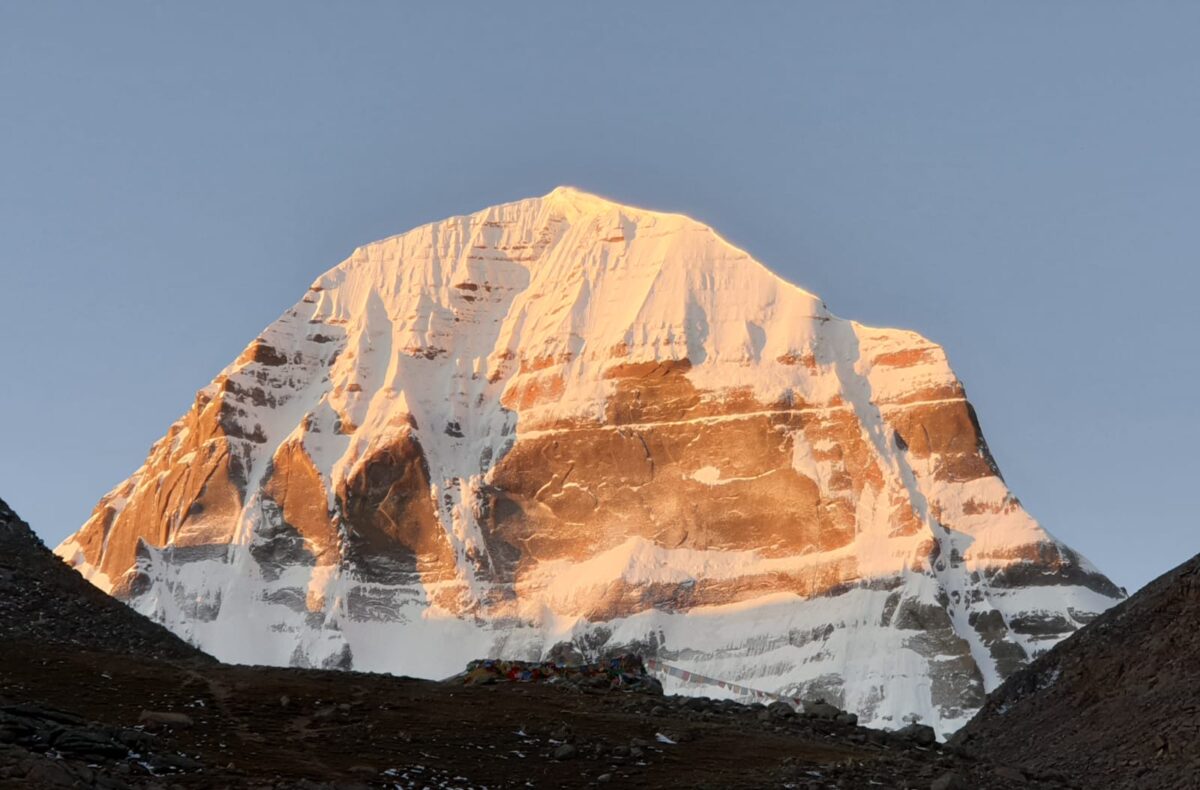
Pilgrims bathe at Lake Mansarovar because Hindu, Buddhist, Jain and Bon traditions all treat it as one of the purest places on earth. A holy bath is believed to wash away sins and prepare you, body and mind, for the Mt Kailash Kora. That is why the lake comes first on almost every Mansarovar Kailash yatra. One important update: Chinese authorities currently do not allow pilgrims to enter the lake, so a full dip is not possible. Pilgrims instead draw water from the lake and bathe a short distance away, or wash their face, hands and head with it. Rules can change, so ask us for the latest guidance before you book.
If you are researching a Lake Mansarovar tour, you have probably seen the same line again and again: “Take a holy dip in Mansarovar before the Kailash parikrama.” It sounds simple. But the rules have changed, and many older guides still describe a full dip that is no longer allowed.
This guide explains why the bath matters, what the rule is today, and how pilgrims still carry out the ritual, so you know exactly what to expect before you book a Mt Kailash tour. It is part of the Tibet Tours Blog from our team at tibettour.travel.
What Is Lake Mansarovar?
Lake Mansarovar sits in far western Tibet, a short drive from the base of Mount Kailash. The name comes from two Sanskrit words, manas (mind) and sarovar (lake), so it is often translated as “the lake of the mind.” In Tibetan it is called Tso Mapham, which means roughly “the unconquerable lake.”
It is one of the highest freshwater lakes in the world, and the water is famously clear. On a calm day you see Mount Kailash in the distance and the Gurla Mandhata range on the other side, with the lake in between.
Lake Mansarovar at a Glance
| Location | Ngari region, western Tibet |
| Altitude | Around 4,560 m (a little higher by some measurements) |
| Water | Fresh water |
| Distance around the lake | Roughly 90 km |
| Nearby | Mount Kailash (6,638 m), Rakshas Tal, Darchen town |
| Sacred to | Hindus, Buddhists, Jains and Bon followers |
| Four great rivers | The Indus, Sutlej, Brahmaputra and Karnali all rise in the Kailash and Manasarovar region |
| Entering the water | Not allowed at present (see below) |
Can You Take a Dip in Lake Mansarovar Now?
No. Chinese authorities prohibit bathing and swimming in Lake Mansarovar, reportedly to prevent pollution and protect the lake. The restriction has been reported since around 2018, and pilgrims were still not allowed to enter the water during the 2026 season.
Guides and local staff watch the shoreline, so stepping into the water can cause trouble for you and for your whole group. Please do not try to get around it. If you read an older blog or a pilgrim’s account describing a full dip, it describes how things used to be.
Rules at holy sites can change from one season to the next, so confirm the latest guidance with your operator before you travel.
How Do Pilgrims Take a Holy Bath Instead?
Pilgrims still honor the tradition, just not by entering the lake. The usual ways are:
- Draw water and bathe nearby. Pilgrims fill a bucket or container with lake water and bathe a short distance from the shore, at a spot your guide points out.
- Wash the face, hands and head. A small amount of lake water is enough for many people.
- Sprinkle water on the head, or take a small sip, as many pilgrims do.
- Perform prayers and rituals on the shore. Puja, chanting, offerings of prayer and quiet meditation by the water all continue as before.
Some pilgrims feel disappointed that they cannot go in. Many find the ritual still feels meaningful this way, especially with the lake and Mount Kailash in view. The dip was never the only part of the pilgrimage, and nobody is required to do any of it.
Why Do Pilgrims Want to Bathe in Lake Mansarovar?
There are a few reasons, and they overlap.
1. Purification. In Hindu tradition the lake was born from the mind of Brahma, and its water is considered pure in a spiritual sense as well as a physical one. Many pilgrims say a bath washes away the sins of this life and of many past lives. Some also believe that drinking the water brings release from the cycle of rebirth.
2. Preparation for Kailash. Hindus believe Mount Kailash is the home of Shiva. You would not walk into someone’s home without washing up first. The bath is a way of arriving clean, in body and in intention, before you start the Kora.
3. A very old pilgrim habit. Pilgrims have been making this journey for well over a thousand years. Bathing, offering prayers, and sitting quietly on the shore is simply how it has always been done.
4. A tradition about dawn. Hindu belief holds that the gods come down to bathe in the lake in the hours before sunrise, a time called Brahma Muhurta. Some pilgrims go to the water early for this reason.
You do not have to believe any of this to be moved by the place. Many travelers of no particular faith say the quiet beside Lake Mansarovar was the most peaceful part of the whole trip.
How Do Different Faiths See Lake Mansarovar?
| Tradition | What the lake means |
|---|---|
| Hinduism | Created by Brahma’s mind. A bath cleanses sins, and the lake is the sacred companion of Kailash, Shiva’s abode. Rituals on the shore are common. |
| Buddhism | Linked to the legendary lake Anavatapta. Tradition connects it to Queen Maya, the mother of the Buddha. Pilgrims walk around it clockwise and many wash with or drink the water. |
| Jainism | The region is tied to Rishabhanatha, the first Tirthankara, whose liberation is placed at Ashtapad, which Jains identify with Kailash. |
| Bon | Followers call the mountain Tise and see the area as the heartland of the ancient Zhang Zhung kingdom. The lake is sacred to them as well. |
Because so many traditions share the lake, you will often see pilgrims of different backgrounds standing side by side at the shore, each doing something a little different.
Why Visit the Lake Before the Kailash Kora, Not After?
Most pilgrims do it in this order, and it makes both spiritual and practical sense.
- Spiritually, the ritual bath is a cleansing before you approach the mountain. Doing it first sets the tone for the whole pilgrimage.
- Practically, the Mt Kailash Kora is three days of hard walking with no hot showers. The lake day is your last easy, calm day before it starts.
- For your body, the lake sits at a similar height to Darchen, so you stay at roughly the same altitude while you rest. You are not climbing yet.
On our Mt Kailash Group Joining Tour 2027, the route follows exactly this order. You reach Lake Mansarovar on Day 4, spend the night by the lake, and drive to Darchen on Day 5 before the Kora begins on Day 6.
Is It Safe to Bathe With Lake Water at 4,560 Meters?
Even without entering the lake, the cold and the altitude still matter. The water is very cold, often only a few degrees above freezing even in summer, and the wind on the shore can be sharp. At this altitude the cold hits harder, your breathing is already working harder, and your body recovers more slowly. A few sensible habits help:
- Wait until you have acclimatized. Do not do a full bath on the day you arrive if you have a headache, nausea or dizziness. Our guide to altitude sickness in Tibet explains the warning signs.
- Keep it short. A quick wash is enough. Do not stay wet in the wind.
- Have warm, dry clothes ready, plus a towel and a hat, and a place to change quickly, such as your vehicle.
- Skip the full bath if you have a heart condition, high blood pressure or breathing problems, or if you are not feeling well. Washing your face and hands is a gentler option. Talk to your doctor before the trip.
Rules and Etiquette at the Lake
Lake Mansarovar is an active holy place, so a few simple rules apply.
- Do not enter the lake to bathe or swim. This is currently prohibited.
- Do not use soap, shampoo, toothpaste or detergent in or near the water. If you bathe with lake water, do it away from the shore so nothing drains back into the lake.
- Do not wash clothes or dishes in the lake.
- Do not leave rubbish, flowers wrapped in plastic or other offerings that will not break down.
- Do not fish or disturb the birds and wildlife.
- Dress modestly. Many pilgrims wash in clothes or a wrap and change afterwards in the vehicle.
- Be mindful of other pilgrims who are praying or doing rituals. Keep your voice low and ask before photographing people.
- Check before filling a bottle to take lake water home. Some seasons restrict collecting water, so ask your guide first.
- Follow your guide’s instructions on the day. Local rules at the shoreline can change.
What Is the Best Time of Day for a Ritual Bath?
| Time | Good side | Hard side |
|---|---|---|
| Before sunrise | Matches the traditional Brahma Muhurta, and the light on Kailash is beautiful | Coldest time of day, and the wind is often strongest |
| Mid-morning | Sun is up, a bit warmer, still calm | Slightly less atmosphere |
| Afternoon | Warmest part of the day | Wind often picks up on the plateau |
If you want the traditional dawn experience, dress warmly and keep it very short. If you just want to take part without suffering, mid-morning is the easier choice. Your guide can tell you what the conditions are like on your day.
On the Mt Kailash season side, the best months are generally May to September, when roads and weather are more stable. Saga Dawa, the Buddhist festival that falls around late May or June on the lunar calendar, is a popular time for pilgrims. Dates and access can change, so confirm everything with your operator before you book flights.
How Lake Mansarovar Fits Into the Mt Kailash Tour
Here is how the lake days look on our Mt Kailash group joining itinerary from Kathmandu via Kerung.
| Day | Route | Altitude | What happens |
|---|---|---|---|
| Day 3 | Kerung to Saga | 4,600 m | Long drive across the Tibetan plateau |
| Day 4 | Saga to Lake Manasarovar | 4,560 m | First view of Kailash, arrive at the lake, overnight by the shore |
| Day 5 | Manasarovar to Darchen | 4,560 m | Morning at the lake, then drive to Darchen to prepare for the Kora |
| Day 6 | Darchen to Dirapuk | 4,900 m | Kailash Kora begins, 5 to 6 hours of trekking |
| Day 7 | Dirapuk to Zutulpuk via Dolma La Pass | 5,630 m at the pass | The hardest day, 8 to 10 hours |
| Day 8 | Zutulpuk to Darchen, then Saga | Kora ends, drive back to Saga |
If you want to see how hard the days after the lake are, read our Mount Kailash Kora complete guide and the Kailash trek difficulty and fitness guide.
Can You Walk or Drive Around Lake Mansarovar?
Yes. The full circuit around the lake is roughly 90 km. Some pilgrims drive it in a few hours, stopping at the small monasteries on the shore, such as Chiu Gompa. A few walk it over several days as a pilgrimage in its own right.
The standard group joining itinerary does not include a full lake circuit, because the schedule is built around getting you acclimatized and onto the Kora. If a circuit around the lake matters to you, ask us about a customized trip with extra days at Manasarovar.
Lake Mansarovar vs Rakshas Tal
Right next to Mansarovar is a second lake called Rakshas Tal, and people often get them mixed up.
| Lake Mansarovar | Rakshas Tal | |
|---|---|---|
| Water | Fresh | Salty or brackish |
| Shape | Round | Crescent shaped |
| Meaning in tradition | Pure, sacred, associated with light and the mind | Associated with the demon king Ravana |
| Pilgrim activity | Ritual washing with its water, prayers, circumambulation | Usually viewed, rarely bathed in |
The two lakes sit side by side with Kailash looking over them, which is a big part of why the whole area feels so striking.
What to Pack for the Lake Day
- Thermal base layers and a warm jacket
- A hat, gloves and a windproof layer
- A quick-dry towel and a full change of dry clothes
- Sandals or shoes that are easy to take off
- Sunscreen and sunglasses, because the sun at this altitude is strong
- A small container or mug if you plan to wash with lake water (ask your guide what is allowed)
- Any regular medication, plus altitude medication if your doctor recommends it
Lake Mansarovar for Indian Pilgrims
A large share of Mansarovar Kailash yatra travelers are Indian pilgrims, and the permit process for Indian nationals follows a different route from other travelers. We cover this in our Mount Kailash permits and travel requirements guide. We also run a dedicated Mt Kailash group joining tour for Indian citizens (14 days).
Planning Your Lake Mansarovar and Kailash Tour
A few things to sort out early:
- Permits and visas. Independent travel in Tibet is not allowed, so everything is arranged through a licensed agency. Start with our Tibet Travel Permit guide and the comparison of the China visa vs Tibet Travel Permit.
- Group or private. Deciding between the two changes your dates, pace and cost. Read group joining vs private Mt Kailash tour before you choose.
- Itinerary length. If you want more time at the lake, look at our Kailash Spiritual Tour (10 days) or the Mt Kailash Manasarovar Tour (15 days).
- Helicopter option. If you prefer a shorter, less strenuous route, see the Kailash Manasarovar Yatra Helicopter Tour (14 days).
- More reading and trips. Browse more guides on the Tibet Tours Blog, or see all our Tibet tours and Tibet treks.
Frequently Asked Questions
Is bathing allowed in Lake Mansarovar? No. Chinese authorities currently prohibit bathing and swimming in the lake, and pilgrims are not allowed to enter the water. Pilgrims instead draw water from the lake and bathe a short distance away. Rules can change, so confirm the latest guidance with your operator before you travel.
Can you take a holy dip in Lake Mansarovar? Not at present. The restriction has been reported since around 2018 and was still in force in the 2026 season. You can wash your face, hands and head with lake water, bathe nearby using water drawn from the lake, and pray on the shore.
Why do pilgrims bathe in Lake Mansarovar? Because the lake is believed to be spiritually pure. Hindu tradition says a bath washes away sins, and many pilgrims want to cleanse themselves before the Kailash Kora. Buddhists, Jains and Bon followers also hold the lake sacred.
Is the ritual bath compulsory? No. It is a personal choice. You can wash your face and hands, sprinkle water on your head, or simply sit by the shore and still take full part in the pilgrimage.
Can you swim in Lake Mansarovar? No. Swimming is not allowed, and the water is also very cold at this altitude.
How cold is the water in Lake Mansarovar? Very cold. Even in summer it is often only a few degrees above freezing, and the wind on the shore makes it feel colder. Keep any washing short and dress warmly afterwards.
What is the best time for the ritual bath at Lake Mansarovar? Traditionally it is before sunrise, but that is also the coldest time. Mid-morning is easier on the body. Wait until you have acclimatized, and skip it if you feel unwell.
Should you visit the lake before or after the Kailash Kora? Before. Pilgrims cleanse at the lake first, then do the Kora. That is also the order of our Mt Kailash group joining tour, with the lake on Day 4 and the Kora starting on Day 6.
What is the altitude of Lake Mansarovar? Around 4,560 m on our itinerary, and slightly higher by some measurements. Mount Kailash itself is about 6,638 m, and the highest point of the Kora, Dolma La Pass, is 5,630 m.
How far is Lake Mansarovar from Mount Kailash? Roughly an hour or so by road to Darchen, the town where the Kailash Kora begins. On a clear day you can see Kailash from the shore.
Is it safe to bathe with lake water if I have altitude sickness symptoms? No. If you have a headache, nausea, dizziness or breathlessness, skip the bath and rest. See our altitude sickness guide.
Can I take water from Lake Mansarovar home? It depends on the season and the current rules, and some seasons restrict collecting water. Ask your guide before you fill a bottle.
Can I do a parikrama around Lake Mansarovar? Yes. The circuit is roughly 90 km. It is usually driven in a few hours or walked over several days. The standard group joining itinerary does not include it, but a customized trip can.
What is the difference between Lake Mansarovar and Rakshas Tal? Mansarovar is a round, freshwater, sacred lake. Rakshas Tal is next to it, crescent shaped, and its water is salty. Tradition links it to the demon king Ravana, and pilgrims rarely bathe in it.
Do I need a permit to visit Lake Mansarovar? Yes. You need a Tibet Travel Permit, an Alien’s Travel Permit and a Kailash special permit, plus a China Group Visa if your passport requires one. Your operator arranges all of these.
Who can do the Mansarovar Kailash yatra? Most people in good general health can, including beginners, with some preparation. See our fitness guide and talk to your doctor first, especially if you have heart, lung or blood pressure conditions.
Ready to Plan Your Lake Mansarovar and Mt Kailash Tour?
The best way to plan is to tell us a bit about you. Send us an inquiry with your nationality, preferred travel window, group size and whether you want the standard route or a customized itinerary with extra time at the lake. We will walk you through permits, timing, the current rules at the lake and what the days at Lake Mansarovar will be like, so you arrive prepared.
You can also look straight at the Mt Kailash Group Joining Tour 2027 for the full itinerary, visit tibettour.travel for all our tours, or read more guides on our blog.